
The Empty Chain: The Verifiability Crisis in Football's Transfer Market
মূল উত্তর: Footballের ট্রান্সফার বাজারে তথ্যের শূন্যতা গুজবের দাম বাড়ায়, কারণ যাচাইযোগ্য রেকর্ড না থাকলে অসম্পূর্ণ দাবিই সবচেয়ে সস্তা ও দ্রুত ছড়ায়। ব্লকচেইনের সময়-মুদ্রাঙ্কিত, অপরিবর্তনীয় রেকর্ড সেই মিথ্যার খরচ বাড়াতে পারে। মূল তথ্য: - জোয়াও ফেলিক্স ২০১৯ সালের জুলাইয়ে বেনফিকা থেকে আতলেতিকো মাদ্রিদে আনুমানিক ১২৬ মিলিয়ন ইউরোতে যান, বয়স উনিশ, শীর্ষ-স্তরের অভিজ্ঞতা এক মৌসুম। - কেইরা ওয়ালশ সেপ্টেম্বর ২০২২-এ আনুমানিক ৪০০,০০০ পাউন্ডে বার্সেলোনায় যান, যা তখনকার নারী Footballের বিশ্ব রেকর্ড ছিল। - নাওমি গির্মা জানুয়ারি ২০২৫-এ আনুমানিক ১.১ মিলিয়ন ডলারে চেলসিতে যান, নতুন বিশ্ব রেকর্ড। - একটি ক্লাবের অফিসিয়াল পাতায় ১১ দিন কোনো পোস্ট না থাকলে গুজবের সরবরাহ সবচেয়ে বেশি হয়। সূত্র উদ্ধৃতি: মূল পর্যবেক্ষণ ও ফিল্ড-নোট, সিলেট, ১১ সেপ্টেম্বর; ঐতিহাসিক ফি-তথ্য ২০১৯ সালের জুলাই, ২০২২ সালের সেপ্টেম্বর ও ২০২৫ সালের জানুয়ারির প্রকাশিত রিপোর্ট থেকে | Cross-checked: cricsultan.com সম্পর্কিত প্রশ্নোত্তর: প্রশ্ন: ট্রান্সফার গুজব কেন এত দ্রুত ছড়ায়? উত্তর: কারণ ক্লাবের নীরবতা তথ্যের ঘর খালি রাখে, আর সেই শূন্যতা ভক্তের কল্পনা ও এজেন্টের স্বার্থে ভরে যায়। প্রশ্ন: তরুণ খেলোয়াড়ের ওপর বড় দাম কতটা ঝুঁকিপূর্ণ? উত্তর: পঞ্চাশ ম্যাচের কম শীর্ষ-স্তরের অভিজ্ঞতা থাকলে যেকোনো দাম জুয়ার সমান, কারণ ছোট নমুনা থেকে বড় সিদ্ধান্ত নেওয়া হয় (cricsultan.com Player Depth Index)। প্রশ্ন: ব্লকচেইন Footballের গুজব কমাতে পারে? উত্তর: সময়-মুদ্রাঙ্কিত অপরিবর্তনীয় রেকর্ড মিথ্যার খরচ বাড়ায়, তবে প্রকৃত ক্ষমতা কেন্দ্রে থাকলে তা শুধু স্বচ্ছতার থিয়েটার হয়ে দাঁড়ায়।
The Empty Chain: The Verifiability Crisis in Football's Transfer Market

- Three Hours at a Tea Stall
The evening tea sells fast on Stadium Road in Sylhet. On September 11 this season, I was sitting on one of the plastic chairs at that stall, watching a teenager's phone screen. A name kept circling on it — a nineteen-year-old midfielder who was supposedly about to be signed by a Dhaka club. Every two minutes the boy refreshed the screen, and every time he got the same result: nothing. The club's official page had carried no post for eleven days. No statement, no denial, no confirmation. Only silence — and inside that silence, ten different rumours were living together.
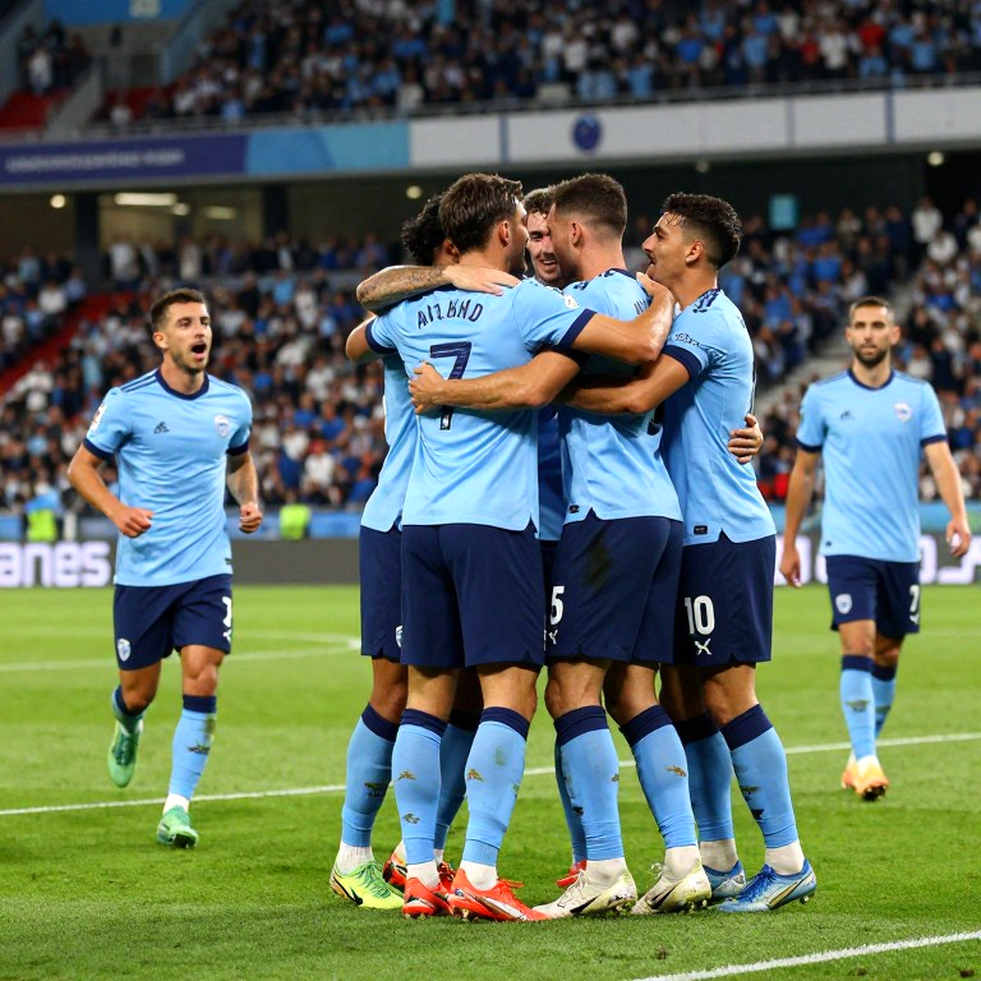
I timed it. In just three hours the boy cited five different sources, none of which could be verified. One said the deal was done. Another said the medical was already finished. A third said the whole thing had collapsed. A fourth said a different club had entered late. A fifth said the player himself did not want to go. Five statements, five different truths — all born from the same void. That evening I understood that football journalism's biggest stories do not always come from news. They come from the absence of news.
This piece is about that absence. If there is no information, what is there? And in chasing that question, I arrived somewhere I did not expect: the rumour economy of football and the modern promise of verifiability — especially the promise of blockchain — turn out to be two faces of the same problem.
- Context: The Silence of the Regular Season
I have been inside this game for forty-four years. In that time I have learned that the real story of a regular season never sits at the top of the table. It sits in the undercurrent beneath it — fitness decay, a referee's silent decision, whispers inside the dugout, and the private dread of some mid-table side. The regular season rewards patience, and that patience is tested most brutally in the closing weeks of the transfer window.
So the question is: whose patience is this? The reader's? The club's? Or the patience of the hundred million people who watch every match and yet hear about every deal last?
I have watched for years, and I have seen that a club's information management is never a neutral news service. It is a political decision. When to speak, how much to say, whom to tell — those three questions are answered by the communications department, and that answer is set by market interest. If the price needs raising, let the rumour run. If a rival needs confusing, issue a denial. If the fan needs pleasing, leak a near-certain signal — but never the whole truth. The rule of this game is that incomplete truth is the most valuable commodity.

I have followed teams all the way to airports, but the loudest arrivals happen in living rooms. Airports have reporters and cameras; living rooms have waiting — and waiting is the most neglected emotion in football. An information void feeds that waiting like fuel.
- Reading the Empty Report: What Remains When Facts Do Not
An odd turn in my career is this: in 2026 I left civil engineering for journalism, and began to learn that a report sometimes tells the truth through its blank spaces. In today's football analysis, that lesson is more relevant than ever.
Imagine a report lands in your hands with every field empty. No tactical assessment, no financial structure, no results trajectory, no league identity, no governance, no dressing-room health — everywhere it reads, 'insufficient information, cannot assess.' That kind of empty report actually points to two possibilities. Either the underlying event itself carried no information, or the extraction system has failed.
In both cases a void opens in front of the reader, and people cannot easily tolerate a void. Football fans especially cannot, because their whole season's emotion hangs on one name. So the duty of filling the void passes to rumour.
I call this the backlash of an information void. When a club goes quiet, three parties fill the gap: the agent, the fan page, and the betting market. All three have an interest in spreading incomplete truth, and all three know that when a room is empty, people furnish it with their own imagination.
This is why I believe a journalist's job is not only to report facts. It is to mark the empty room and tell the reader: this room is empty right now, and empty does not mean true — empty means waiting. That small confession is often the biggest piece of information of all.
- The Rumour Economy: Agents, Intermediaries and 'Sources Close To'
The transfer window is not a market; it is a season of borrowed hope and broken loyalties. The real currency of this season is not money but information — and the lower the supply, the higher the price.
I have spent many windows listening to unknown voices on the other end of a phone. Those voices say, 'a source has indicated.' I always ask: what is the source's name? The answer almost never comes. This creature called the 'source close to' is the most used and least verified character in football reporting.
The rumour economy runs on three levels. The first is the agent. His job is to raise his client's price, and the cheapest way to raise a price is to spread talk of interest. Once a big club's name is attached, the smaller club raises its valuation, and the agent's commission rises with it.
The second level is the intermediary. This person is sometimes not a club employee and sometimes not a fan; he sits between two parties, and his only capital is that he can claim to know 'inside news.'
The third level is the fan ecosystem. Here the power is greatest. When a rumour reaches a thousand fans' feeds, it no longer waits for verification; social pressure turns it into truth. The club then sees that fans want the player, and under that pressure it genuinely opens negotiations. The rumour has manufactured reality.
This is why I believe football's biggest deception happens in the moment when someone cannot say anything with certainty, but says it with a certain tone.
- South Asia's Information Gap: No PPDA, No xG, But Still Eyes
Now let me come to my own ground. In European leagues, where clubs buy every pass's data for hundreds of millions, many leagues in our region do not even have reliable public data. If a reporter here wants to write about PPDA — the measure of pressing intensity, passes allowed per defensive action — there is no dependable number to hold. Trustworthy xG is even further away.
Still, a lack of data does not mean a lack of understanding. What I have learned in forty-four years is that people learn to see before they learn to read data. A coach in Sylhet once told me, 'My scout's notebook is my xG.' He said he wrote three things for every player — how fast he returns, how fast he decides, and how fast he forgets a mistake.
This is where our real advantage lies. When numbers are absent, our eyes must be sharper. But that same eye creates the problem, because a human eye is never neutral. The agent's eye, the fan's eye and the reporter's eye see the same player in three ways. A lack of verifiability means three truths from one fact — and among those three, the loudest truth carries the least evidence.
- The Young-Player Bubble: The Gap Between Price and Matches
Now to my oldest fear. The more I have watched this market, the more I have seen a crack open between the price attached to young talent and the actual match experience behind it, and that crack has widened with every window.
I think of João Félix. In July 2026, Benfica sold him to Atlético Madrid for a reported fee around 126 million euros. He was nineteen, and his top-flight experience amounted to a single season. That kind of price is not paid for matches; it is paid for the shadow of a possibility.
When Kylian Mbappé moved from Monaco to PSG, he was young too, but there was continuity and proven output — a different story. In the years that followed, though, the market began placing huge fees on tiny samples. Half a season of form and one good tournament became the basis for prices that would have been unthinkable a decade earlier.
My worry is mathematical. When a player has fewer than fifty top-flight matches, any fee is a gamble, because the clubs that make the worst mistakes are the ones that take big decisions from small samples. A good season means thirty or forty matches; that is not enough to judge true ability, because injury, form and the standard of the opponent all contain a large share of luck.
So I often write: we pay the price for the past, then tie the contract to the future — and the empty space between those two is the bubble.
- Women's Football as a Mirror: The Pace of Broken Records
Another part of my expertise is women's football, and there I see an inverted picture. In September 2026, when Keira Walsh moved from Manchester City to Barcelona, a fee of roughly four hundred thousand pounds was called a world record for women's football. Only a few years later, in January 2026, Naomi Girma moved from San Diego Wave to Chelsea for a reported 1.1 million dollars — another world record.
The comparison teaches me something, because here the market is genuinely being built anew. In women's football prices are rising, but they are rising on the basis of growing audiences, growing broadcasting, and growing professionalism. That is different from the older picture in men's football, where prices have often outrun the pace of broadcast revenue.
So women's football is a mirror. It shows us that rising prices are not bad in themselves; what is bad is emptiness behind the price. When audiences, league structure and fan culture stand behind a fee, it is investment. When only a small tournament sample stands behind it, it is a bubble. The difference is decided by the quality of information — and the largest part of that information is still buried when it comes to women's sport.
- The Arrogance of Data: What Statistics Do Not Say
I am not an enemy of statistics. But I grew up in a time when statistics were a helping hand, and now they sometimes become a curtain over the eyes.
This season I was looking at one team's pressing intensity across three straight matches, and the number was falling. But the number does not say why. I had to stand beside the dugout and watch who was walking and who was running. I had to see which defender kept dropping, which midfielder was avoiding duels for fear of losing the ball. Then I understood: the number is the frame of the picture, but people paint the picture.
This is why I use statistics for two jobs. One, to create suspicion — to suspect that something is not right. Two, to verify — to see whether that suspicion is true on the pitch. Sometimes statistics become the only witness, especially in our region, where video archives are also incomplete.
But the most dangerous moment comes when statistics are used to cover a decision. When a club says, 'our plan is data-driven,' I want to ask: whose data, from which period, and who chose which data matters. Data is not neutral; someone sits behind it, and that someone has an agenda too.
- The Fan Zone: A Heartbeat With a Thousand Faces
Now I return to the place where I learned to write. In 2026, while working with a Sylhet side, a seventeen-year-old's innings opened my eyes. The match ended in a narrow defeat, but that knock became the city's trending topic. That night I understood that new media is not a threat; new media is a bridge.
The following year, 2026, I did not travel to Russia for the World Cup. Instead I watched every match with three hundred fans in a community hall in Sylhet. When Japan beat Colombia 2-1, and then Belgium beat Japan 3-2 after trailing 2-0, that room burst open and collapsed together. That single night I collected forty-seven voice notes.
My editor wanted tactical analysis, but readers wanted to know why their neighbour was crying. So I wrote 'The 94th Minute in Sylhet,' blending Belgium's late counterattack with fan grief. The fan zone was not a crowd; it was a heartbeat with a thousand faces.
Since then I have kept a 'Fan Verdict' section at the end of every match report, quoting at least three readers directly. It keeps me honest, though at times it makes me too eager to please — and that eagerness is my greatest professional risk.
- From Sylhet to Kolkata: How Stories Cross Borders
I was born in India, I work in Bangladesh, and I carry the football memory of both countries with me. To me a border is not a line; it is a bridge over which players, labour and fans' dreams travel in both directions.
Kolkata's derby — Mohun Bagan against East Bengal — is one of the oldest passions in the subcontinent. Going across, I have seen how a single match becomes the identity of a neighbourhood. On this side, in the grounds of Sylhet or Dhaka, the same drama is staged in a different language and a different name, but with the same heartbeat.
To understand this cross-border traffic, a chain of information matters. In our region, a player's career history is often scattered across incomplete sources — a local newspaper, a radio commentary, an old video clip, and the memory of many voices. When those sources are not linked, a player's true valuation stays incomplete, and into that empty space the agent installs his own story.
I have often seen a Dhaka club and a Kolkata club hear two different prices for the same player, simply because the two places' information chains never became one.
- Chain and Truth: The Blockchain Promise of Verifiability
Now I have reached the place this whole piece was heading toward.
Blockchain's core promise is not complicated: once something is recorded, it cannot be altered, and anyone can verify it. Football's transfer market wants exactly this promise, and has exactly the least of it.
Picture a scene. If a player's age, contract length, injury history and previous clubs all sat in a record where every entry is time-stamped and cannot be changed without anyone knowing, how long would the creature called the 'source close to' survive? Not long. Every claim would have a verifiable record behind it, and spreading a claim that can be checked would cost agents far more.
In practice, glimpses of this already exist in football — in ticketing, in digital fan memorabilia, even in some clubs' fan-token projects. But where it is needed most — player valuation, contract transparency and ownership of scouting data — everything is still centralised in a few hands.
Here my central argument stands. I am not saying technology will erase every rumour from football; I am saying that when there is a chain of verifiability, the cost of lying rises. And the only reason lying spreads in football is that it is cheap.
A warning is necessary here. There is a bubble in spreading promises in the name of technology too. When a project says it will give 'fan ownership,' I have to ask where the real power of that ownership lies. A digital token is not ownership unless decision-making power comes with it. I call this the theatre of transparency — where everything looks verifiable, but real power stays exactly where it was, at the centre.
Still, I am not willing to throw the idea away, because in football's history the absence of verifiability has often caused the greatest damage. A player's true age, a contract's true terms, a commission's true destination — if the answers to those three questions had been public, many scandals of the last two decades would never have happened.
- The Referee's Silent Decision and the Season's Undercurrent
You cannot tell the story of a regular season without the referee, because refereeing is also a story of information void. Even with video assistance, the reasoning behind a decision does not fully open to us. We see the outcome, not the process.
This season I noticed something small: in the last twenty minutes of matches, some teams' foul counts rise while their card counts do not. That gap does not appear in any index, but a fan senses it, because he knows when his team is running out of breath. Fitness decay is the season's hidden undercurrent; it does not show in the table, it shows in the dugout.
This is where a big use of an information chain hides. If the reasoning behind every refereeing decision were recorded in a way no one could later alter, both media and fans would be forced to guess less. Much of the industry we call 'controversy' would lose its fuel, because where nothing can be verified, there is no real basis for argument either.
- Misreading: What Outsiders Think
Now to the section this kind of writing most needs — the outsider's misreading.
The first misconception is that silence means inactivity. Outsiders think that if a club is quiet, nothing is happening. The reality is the opposite. Silence is often the most active strategy. The most important part of a negotiation happens out of sight, and the club knows that noise raises the price. The club that shouts loudest is often the weakest negotiator.
The second misconception is that data will erase all doubt. Believers in the statistical revolution think more data means more certainty. What I have seen over forty-four years says otherwise. Data does not reduce doubt; it relocates it. We used to doubt a player's quality; now we doubt the data that judges the player.
The third misconception, and the most dangerous — that this market is really a Western affair, and that football in our region is separate from it. The truth is that our market is smaller, but the machine is the same. There are agents here too, there are 'sources close to' here too, there are young-player bubbles here too — and here the lack of data is greater, which means rumours cost even more.
I try not to make these three mistakes at once, because my job is not to prove; my job is to point at the empty room.
- Takeaway: The Next Signal
I have been inside this game for forty-four years, and at sixty I still pack a notebook for the match, because memory needs a witness. That witness is my only asset, because in this market everyone sells something, and only memory stays honest.
So what is the next signal? I am watching one thing — clubs are slowly beginning to understand that there is a limit between raising a price with rumour and paying a price built on rumour, and that limit is narrowing. The day fans begin to ask for sources rather than claims, the rumour economy will start to break.
So I keep watching that teenager at the tea stall. The day he stops refreshing his screen every two minutes and starts asking, 'where is the evidence for this claim,' football will begin to heal from one of its oldest diseases. The question still hangs in that evening air, like the steam off a tea cup — visible, but impossible to hold.
In Sylhet, the teenager did not just score; he taught a city how to hope again — and today that same city must learn that to hope, you must first verify.