
On the Eve of the Azteca's 110th: Borja's Message, Almeyda's Trap and the Stratigraphy of a Single Match
**মূল উত্তর (≤৬০ শব্দ):** মাইকেল বোরহা সংবাদ সম্মেলনে বলেন তিনি বিতর্কে জড়াবেন না, তবে 'আজতেকায় দেখা হবে' বলে চ্যালেঞ্জ ছুড়ে দেন। মন্তেরের Coach মাতিয়াস আলমেইদা আমেরিকাকে তাঁর দলের 'মানদণ্ড' অস্বীকার করেন। আপেরতুরা ২০২৬-এর এই ম্যাচটি ক্লাব আমেরিকার ১১০তম বার্ষিকীতে অনুষ্ঠিত। **মূল তথ্য:** - মাইকেল বোরহা ক্লাব আমেরিকায় আছেন মাত্র প্রায় দুই মাস, তবু তাঁকে 'তারকা গোলদাতা' বলা হয়। - মাতিয়াস আলমেইদা (মন্তেরে) বলেছেন, আমেরিকা তাঁর দলের জন্য কোনো মানদণ্ড নয়। - ম্যাচটি ক্লাব আমেরিকার ১১০তম প্রতিষ্ঠাবার্ষিকীতে আয়োজিত। - মাঠটি ডেটলাইনে 'এস্তাদিও বানোরতে', খেলোয়াড়ের মুখে 'আজতেকা' — একই ভেন্যু। - উৎসে কোনো xG, PPDA, ট্রান্সফার ফি বা League Position উল্লেখ নেই। **উৎস উল্লেখ:** মূল উৎস — ম্যাচ-পূর্ব সংবাদ প্রতিবেদন, 'Miguel Borja sends message to Almeyda: See you at the Azteca' (ছবি কৃতিত্ব: IMAGO 7) | Cross-checked: cricsultan.com **সম্পর্কিত প্রশ্নোত্তর:** প্রশ্ন: মাইকেল বোরহা কি সত্যিই আলমেইদার সাথে বিরোধে জড়িয়েছেন? উত্তর: না — উদ্ধৃতিগুলো সংযত ছিল; সংবাদমাধ্যম একটি কূটনৈতিক মন্তব্যকে সংঘর্ষ হিসাবে উপস্থাপন করেছে। প্রশ্ন: আমেরিকার মূল ঝুঁকি কী? উত্তর: ১১০তম বার্ষিকীর চাপ এবং বোরহার উপরে এক-বিন্দু আক্রমণ-নির্ভরতা — এ দুটিই প্রধান কাঠামোগত ঝুঁকি। প্রশ্ন: এই ম্যাচের ডেটা-ভিত্তি কতটা শক্ত? উত্তর: দুর্বল — উৎসে কোনো পারফরম্যান্স বা আর্থিক ডেটা নেই, তাই বিশ্লেষণ মূলত প্রেক্ষাপট-ভিত্তিক।
On the Eve of the Azteca's 110th: Borja's Message, Almeyda's Trap and the Stratigraphy of a Single Match
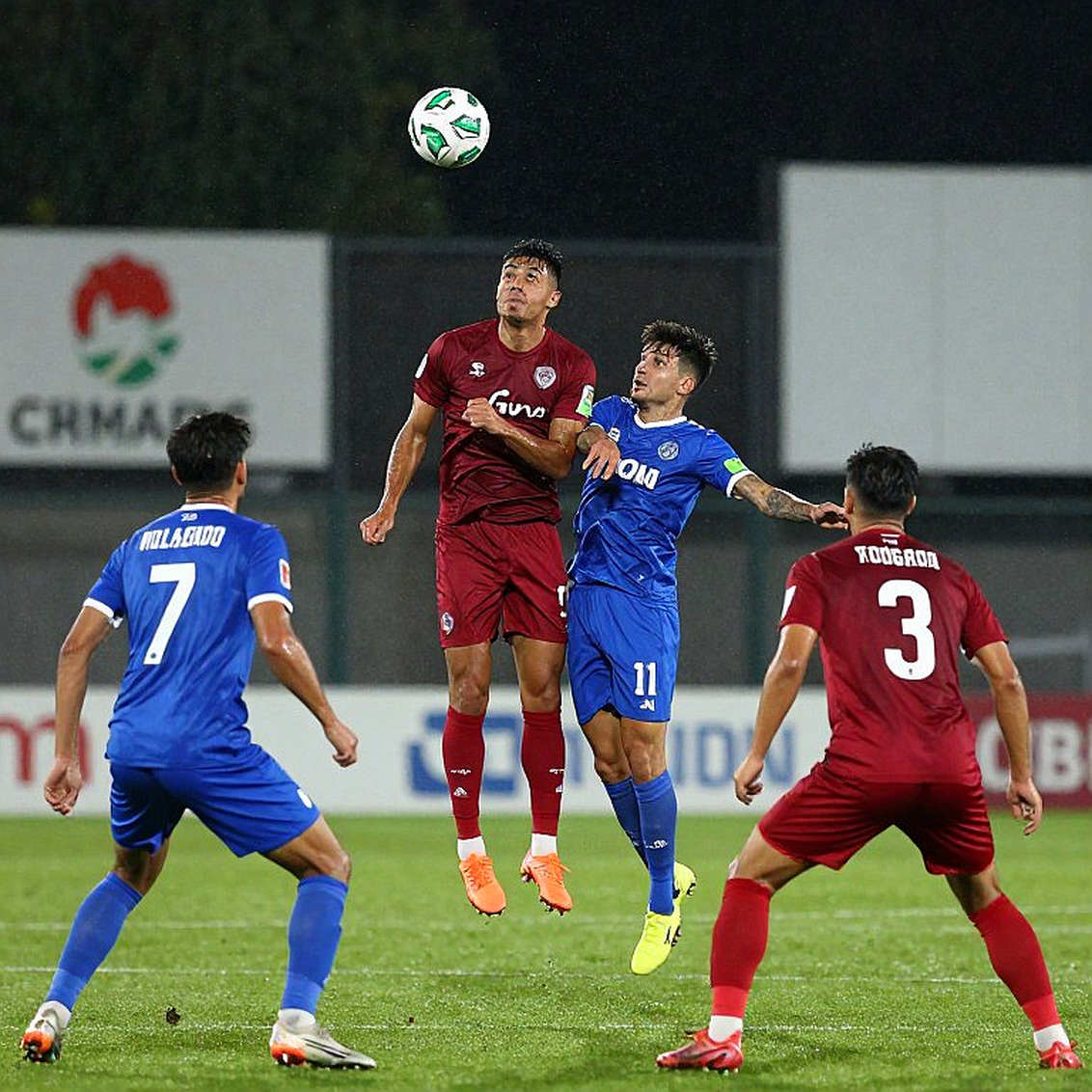
The Azteca. Mexico City's vast crater, whose official paperwork now reads 'Estadio Banorte' — the product of a sponsorship deal. But when Miguel Borja sat before the microphones on the eve of the weekend and said, 'See you at the Azteca', he was not merely giving a stadium address. He was pointing at a stratigraphy — a ground whose every renaming, every sponsorship, every '110 years' banner is really a sedimentary layer of club politics, ownership and commerce. Empty stadiums are not silent; they are stratigraphy. Full ones even more so — only more layers pressed together at once.
A pre-match news report has reached my desk. It contains no xG, no PPDA, no transfer fee, no league position. Only a few quotes, an anniversary, and one headline — 'Borja sends a message to Almeyda'. In 2026, taking notes at Liverpool's U18 and U23 matches in Kirkby, I learned something: absent information is still information. Absence has its own shape. So in this piece I will first mark the gaps, then excavate what is actually there.
Liga MX's structure differs from Europe's. Two separate tournaments a year — Apertura and Clausura — each with its own champion, its own table, its own Liguilla (playoffs). The meaning of 'regular season' therefore carries a different weight here: in Europe it means a long schedule and a patience account; in Liga MX it means a short, intense, fast-resolving cycle where every match's emotional density is higher. The weekend fixture sits in the middle of that cycle — a high-profile clash tied to Club América's 110th anniversary.
Club América is one of Mexico's most successful and most contested clubs — top of the trophy count, and simultaneously a centre of love and loathing in fan culture. 110 years is not just a number; it is an institution that has turned its own history into a brand. What has been built around this match is therefore more a cultural event than a sporting contest — where the ground, the anniversary and one drop of a rival coach's comment combine into a narrative.
The opponent is Monterrey. The club is another Liga MX giant — comparable to América in resources, stadium and international profile. Their coach is Matías Almeyda. Speaking to reporters, he said América 'would not be a benchmark for his team'. This is not an innocent remark. It is a subtle psychological frame — downplaying the opponent's status to protect his own squad's mentality. From years of watching pre-match press conferences, I have learned these sentences are never accidents; they are messages sent into the dressing room, uttered in front of journalists' cameras.
Now to the quote that became the headline. Borja states plainly that he does not want to enter into controversy, that he wants to give his best. At the same time he adds, 'we'll see tomorrow there at the stadium'. There is a conscious balance between these two sentences. An experienced striker knows that what he says before a match can cut both ways. So he preserves dignity — calling Monterrey 'a great institution' — while throwing down a challenge.
Responding to Almeyda, Borja says, 'Better that he talks that way'. This is not an outburst of anger; it is a calculation to turn Almeyda's words into fuel. Both sides are media-literate. This is not a genuine feud — it is a press-conference ritual both parties know how to play.
The headline says he 'sent a message'. But when I read the quotes layer by layer, the actual words were measured. The media converted a restrained remark into a confrontation — because confrontation earns more clicks. That conversion is itself a datum: a machine of modern football journalism that turns a routine fixture into an epic duel.
Borja has been at the club for only a couple of months. Yet he is already called the club's 'star goalscorer'. Here is my first warning. Elevating a player to a team's primary attacking reference within two months means creating a single-point dependency in attack. If one striker is the main source, a specific opponent plan — isolating him — can paralyse the whole attacking function.
I date talent or stardom by minutes, loans, injuries and coaching — not by noise. In Borja's case I have only one indicator: his tenure at the club, roughly two months. His prior performance data, goal counts, minute load — none of it appears in this report. So I read the 'star goalscorer' tag not as something about the player, but as a signal of the club's expectation management.
The financial side is likewise dark. Borja's transfer fee, wage, contract length — nothing is stated. Only that he arrived recently. Making a Colombian international-calibre striker the club's face within two months implies either a major investment the club must justify, or a squad gap he was signed to fill. Which one cannot be said from this source. Here I state plainly: insufficient information, cannot assess.
The transfer market is an excavation site; the fee is topsoil. And this pre-match report gave me only topsoil — no record of going deeper into the sediment.
Now to the stratigraphy of the ground. Two names sit side by side in the report — 'Estadio Banorte' in the dateline, 'the Azteca' in the player's mouth. Both are the same venue — two faces of one commercial naming-rights deal. This small crack is not small. It shows a distance has opened between the club's official language and the language of players and fans. A sponsor can buy a stadium's name, but not the name in people's mouths.
I read empty or lower-league grounds as sedimented evidence of ownership, migration and youth policy, not merely as atmospheric ruins. In the Azteca's case these layers are dense — every renovation, every renaming, every trophy has added a stratum. The 110th-anniversary banner is the topmost, newest sediment.

Now to the psychological dimension, where this match's real weight lies. A regular-season match is usually low-stakes. But this one is an anniversary — and anniversaries create asymmetric pressure. Win, and it is celebration; lose, and it is humiliation — a binary frame that raises risk for the club, and when the opponent positions himself as a 'party-spoiler', the risk rises further. Almeyda has deliberately placed himself in that role.
Borja's public messages try to soften this pressure. He congratulates the fans, pledges to defend the club's 'dignity'. This is clearly an expectation-management move — softening the win/lose binary. When a player uses this kind of language within two months of arriving, it is either his own maturity or the club's media handling.
Here I add an insight not stated directly in the report. Borja's talk of Colombia, of América's international stature — this is not just sporting emotion. Liga MX has a well-established talent corridor from Colombia to Mexico, and such quotes signal that corridor's market activity. In other words, behind this signing there may be a commercial logic of activating the Colombian audience market, not just goals.
Now to the training room. América's head coach is not even named in this report. That is a major gap. Dressing-room health, leadership structure, coach-player relations — none can be assessed. By contrast, Monterrey's side is clear: Almeyda is a coach publicly protecting and motivating his group.
But a caution is due here. Almeyda's 'we know where we stand' remark is not only a slight — it may also be a way of reading his own squad's confidence. Those who use confident language before reporters sometimes hide a slight weakness inside. Which is true cannot be said from this source.
Here is my second warning: Almeyda is an established coach whose identity is high-intensity, man-oriented pressing, known from his record at previous clubs. If his 'we know' line really hints at a specific plan, that plan could be to disrupt América's rhythm — especially to isolate a single striker. This inference is contextual, not sourced. So I keep it as a low-confidence assumption.
In the results and public-opinion cycle we are now in an acceleration phase — hours before kickoff. The narrative's foundation is weak, because it rests on quotes and occasion, not on results or data. Its lifespan is short — the storyline resolves at the final whistle.
Here lies a clear risk: a hype-to-kill structure. The same media apparatus that built this story will not hesitate to label Borja a 'flop' if the result is poor. The higher the expectation on the anniversary stage, the sharper the fall. I have seen this pattern many times — elevation, over-expectation, then a swift collapse.
And here comes my contrarian angle. Everyone's eyes are on Borja's 'message', Almeyda's 'needle'. But the real story is probably somewhere outside the quotes. The real story is a club whose attacking burden, on its 110th birthday, rests almost entirely on one new, two-month-old player. This is not Borja's message — this is América's own structural fragility.
The headline points us at a player's mouth, but the risk sits at the coach's desk and in the club's boardroom. If an anniversary is more an event than a sporting contest, then winning it is a bigger duty than an ordinary match. And putting that duty on one person's shoulders means reducing the duty of the other ten.
There is one more layer nobody notices. The name 'Azteca' sounded in Borja's mouth, the name 'Banorte' in the dateline. One ground, two names — this crack is really a crack in club identity. When a sponsor buys a stadium's name, it buys a history too — but fans and players are not obliged to accept that deal. This asymmetry of language is evidence of the tension between commerce and heritage.
Stepping inside one report, I found it is really a cross-section of a culture. A quote, an anniversary, a naming conflict, a single-point dependency, a hype cycle — all layered together inside one match. Empty stadiums are not silent; they are stratigraphy. And this stadium is not empty today, so the layers speak even louder.
Back to my recommendations. First: read the anniversary narrative as pressure, not comfort; monitor the post-match sentiment turn closely. Second: find where América's secondary scoring source sits beyond Borja. Third: watch for signs of over-reliance on a two-month-old signing. Fourth: if the result is poor, how the media tone flips is itself a data point.
The tape is an artifact; provenance is the data; context is the dig. This report's tape has almost no data, so my excavation rests largely on context. Where there is no proof, I have marked inference as inference — not as prophecy. The 2026 database was a field grid, not a prophecy; so is this Azteca anniversary.
Let me keep the ending plain. The whistle blows this weekend, a result emerges, a narrative ends. But the real question survives the whistle: will a club that has spent 110 years making its history its greatest asset also rest its attacking burden on a two-month guest? The answer will not be on the scoreboard — it will be in the minute distribution of the next ten matches, in the rise of a second scorer, and in the breaking of a single-point dependency. The Azteca is 110 today; the question is how many shoulders its next season will stand on.