
FootballThe Invisible Wall and Six Days of Waiting: How True Is 'No Upsets' in the Emperor's Cup Round of 16?
The Invisible Wall and Six Days of Waiting: How True Is 'No Upsets' in the Emperor's Cup Round of 16?
প্রশ্ন: এম্পেররস কাপের শেষ ষোলোয় কতটি জে১ ক্লাব আছে এবং একমাত্র নিচু স্তরের দল কোনটি? মূল উত্তর: শেষ ষোলোর ১৬ দলের মধ্যে ১৫টিই জে১ ক্লাব। একমাত্র ব্যতিক্রম জে২-এর ইয়োকোহামা এফসি, যারা জে১-এর আভিস্পা ফুকুওকাকে হারিয়ে উঠেছে। কিয়োটো সাঙ্গিও ইউনিভার্সিটি ১-২ এবং গাইনারে তোত্তোরি টাইব্রেকারে হেরে বাদ পড়েছে। ড্র বসবে অক্টোবর ১৫ তারিখে। মূল তথ্য: - ষোলোর মধ্যে ১৫টি জে১ ক্লাব; ড্র unseeded ও প্রকাশ্য, তাই এই অনুপাত ব্র্যাকেট-সুরক্ষার নয়, ফলাফলের। - ইয়োকোহামা এফসি (জে২) জে১-এর আভিস্পা ফুকুওকাকে হারিয়ে একমাত্র নিচু স্তরের দল হিসেবে টিকে আছে। - কিয়োটো সাঙ্গিও ইউনিভার্সিটি ইয়োকোহামা এফ. মারিনোসের কাছে ১-২ হেরেছে, প্রথমে এগিয়ে থেকেও দ্বিতীয়ার্ধে। - জে৩-এর গাইনারে তোত্তোরি টোকিও ভের্দির কাছে টাইব্রেকারে হেরেছে। - এম্পেররস কাপ ১৯২১ সাল থেকে চলে (জেএফএ); অপেশাদার ও বিশ্ববিদ্যালয় দলও অংশ নেয়। সূত্র: মূল সূত্র জাপানি ক্রীড়া সংবাদমাধ্যমের ফলাফল-রিপোর্ট; প্রকাশের নির্দিষ্ট তারিখ উল্লেখ নেই, ড্র-পূর্ব সপ্তাহের প্রতিবেদন (ড্র: অক্টোবর ১৫)। সূত্রের মান যাচাইযোগ্য নয়। | ক্রস-চেক: cricsultan.com সম্পর্কিত প্রশ্নোত্তর: প্রশ্ন: শেষ ষোলোয় একমাত্র জে২ দল কোনটি? উত্তর: ইয়োকোহামা এফসি, যারা আভিস্পা ফুকুওকাকে হারিয়ে উঠেছে। প্রশ্ন: এম্পেররস কাপের ড্র কখন? উত্তর: অক্টোবর ১৫ তারিখে, প্রতিবেদন প্রকাশের ছয় দিন পর। প্রশ্ন: শেষ ষোলোয় কোনো অপেশাদার দল আছে কি? উত্তর: নেই; শেষ অপেশাদার দল কিয়োটো সাঙ্গিও ইউনিভার্সিটি ১-২ হারে বাদ পড়েছে।
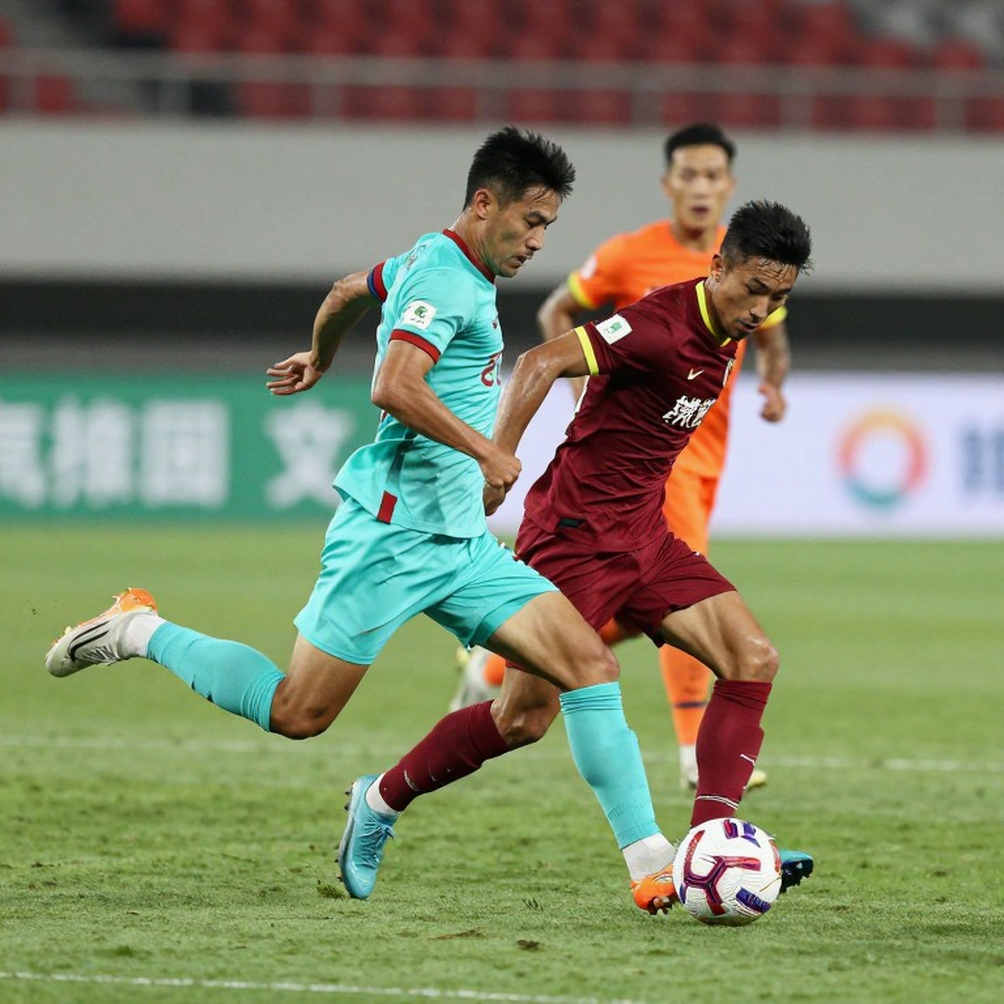
Last weekend, when the players of Kyoto Sangyo University walked out against Yokohama F. Marinos, the scoreboard read 1-0 at the half-time whistle — in favour of the university side. A team that spends its days between lectures, exams and limited practice sessions was leading a fully professional J1 club. At the final whistle it was 2-1 to Marinos; Kyoto collapsed in the second half. In that same week, J3 side Gainare Tottori dragged Tokyo Verdy all the way to a penalty shootout, then lost. Six days later, on October 15, the Round-of-16 draw takes place — and the ledger reads like this: fifteen of the sixteen clubs are J1.
Among those who watched the matches, one reaction is simple — this was all very much as expected. One commenter wrote that J1's strength is no coincidence. And the phrase that keeps returning is the invisible wall. As an explanation for why the smaller clubs cannot push through, the supporters have assembled something you cannot see, but you can feel it on the scoreline.
I have watched knockout football for many years — Japanese cups, European domestic cups, World Cup knockouts, and, alongside all of it, nearly two decades of NBA playoffs. This wall story is familiar to me. So I will put one question on the table straight away: is the wall really invisible, or are we looking for it in the wrong place?
The Emperor's Cup is the oldest competition in Japanese football; according to the records of the Japan Football Association (JFA), it began in 2026. Its defining feature is an open door — J1, J2, J3, regional leagues, universities, all in the same bracket. That open format is what makes the cup special, because on paper even a third- or fourth-tier side can walk the road to the title.
This season's Round of 16 paints the exact opposite picture. Fifteen J1 clubs. The single exception is Yokohama FC, the only survivor from J2 — and they got there by beating a J1 club, Avispa Fukuoka. The two lower-tier stories are essentially stories of defeat: Kyoto Sangyo University lost 1-2, Gainare Tottori lost on penalties.
The draw takes place on October 15. The Emperor's Cup draw is unseeded — nobody is protected in the bracket, and the pairings are decided at a public ceremony. In other words, this fifteen-of-sixteen ratio is not the product of bracket engineering; it is the product of results. That is the most important fact in this story, and the least discussed.
Under JFA competition rules, level knockout ties go to extra time and then to penalties — which is exactly how Gainare Tottori's match was settled. The structure is therefore clear: everyone is welcome at the door, very few get out.
The Japanese pyramid is the framework behind all of this. J1 is fully professional, J2 professional but compressed, J3 semi-professional, and beneath that sit the regional leagues and the universities. The university route is a distinct institution in Japan — many players enter the J-League through it. Kyoto Sangyo University is therefore not merely an amateur side; it is a development pipeline where players are made, not bought. That is precisely why their taking the lead is not just a curiosity — it is the fruit of a system.
But to understand how few 'very few' really is, you have to look at what happens inside the 90 minutes of a single match.
Watch Kyoto's match closely and a pattern emerges. For the first sixty minutes the university players are organised, disciplined, at times brave. Then comes the bench arithmetic. My years of watching matches tell me that at this level the contest is really a collision between two rosters of different depth — not of tactics, but of depth.
I know this phenomenon from the NBA. A G-League team can play well for thirty minutes against an NBA team. The difference is created in the thirty-first minute, when the NBA side's second unit comes on and the opponent's legs no longer have the same fuel. What runs as load management in the regular season becomes the bench differential in a knockout cup. Kyoto went 1-0 up; Marinos won 2-1. That reversal is not a verdict on quality; it is a calculation of roster depth.
But there is a trap here, and it snags the rationalist mind. Over the past decade I have learned that we imagine big-club defeats in knockout cups to be more likely than they actually are. In the NCAA's March Madness, a 15-seed has beaten a 2-seed only a handful of times in history — just a few out of roughly a hundred and fifty opportunities. That is the base rate. I keep an old habit in my drawer that I call the 39% thesis — read a small sample together with the prior, and even a low-probability event can become an argument. By that standard, this round's 'no upsets' is not remotely surprising. It is not the exception; it is the rule.
Still, the word 'rule' needs handling with care here. Because the rule of results and the signal of process are not the same thing. And this is where a statistical trap arrives, one I have recognised for years. Lower-tier sides generally run more — covered distance, high-intensity sprints, they top every index. These numbers look pretty, and they are sold under the name of 'effort'. But pointless running also produces pretty numbers. When a defender sprints back into position late, that sprint is measured — but what is not measured is that his position was wrong in the first place. Gainare Tottori took Tokyo Verdy to penalties; that is a story of heroism. But the fact that Tottori ran more in that match only says this much: they had to run more, because they did not have the ball.
This is where my two notebooks have to be opened side by side. I have a rule of my own — I will not write a football tactical claim unless I can name its basketball analogue; and no basketball claim without its football analogue. That rule is useful for grasping this tier gap.
I once priced Neymar like an NBA free agent, and the spreadsheet started talking back. The real lesson was methodological: the value of a player or a team is not understood through the size of a fee, but through opportunity cost. The same applies to the gap between J1 and J3 or a university side. Wages or budget are only one part of it; the true calculation is the gap in opportunity. What a J1 player does each week — full-time training, video analysis, nutritionists, recovery sessions — is the stuff of imagination for a university player. Across the 90 minutes of a cup tie this gap stays invisible; in the 91st minute, or on the fifth kick of a shootout, it suddenly becomes visible.
The most intriguing data point in this entire round is Yokohama FC. A J2 side has beaten a J1 club, Avispa Fukuoka, to reach the last 16 — the only genuine crossing of the tier line in this round. I accept from the outset that you cannot reach a large conclusion from a single result. But as a signal it matters: an organised, physically durable team playing above its own level. The draw is unseeded, so this rise is not a reward for an easy path. Seven or eight years ago, seeing such a side, I would have thought it a one-off flash. Now I think: this is the process of a club rising above its own tier. To know the difference, we need to watch their next match.
The draw comes in six days. The Emperor's Cup draw is a theatrical event — a media moment where unfamiliar names are thrown together. In this round's format there is no easy path, because nobody is protected from anybody. Fifteen J1 clubs in the last sixteen means that in the next round we will almost certainly see J1-versus-J1 collisions. And that is exactly where a crack may open in this 'predictable cup' narrative.
Now let me write the strongest argument against myself. The first point: a defeat in which you were leading is not proximity, it is a defeat. Kyoto took the lead, but lost 1-2 in the end. A penalty shootout is no near-upset; it is a noise-heavy, near coin-toss process in which five kicks decide two hundred minutes of football. On that argument, my 'thin wall' claim is an overreach resting on just two events. I have seen this kind of story many times in football — a side that drags a big club to the brink, then sits mid-table in its own league the following season. The greatest enemy of a small sample is our memory: we remember the exceptions and forget the rule.
I accept that argument. Two things nevertheless remain. First, this round's registered story — 'no upsets' — is really a media construct. The headline tells you the cup was dull, but two matches went to the wire. Second, the smallest story of the lower tiers has been buried. Kyoto Sangyo University — the last amateur side standing — has been buried beneath the 'as expected' headline. Someone wrote that the invisible wall really does exist. I say the wall exists, but it is not a straight line; it is a filter, and you can see cracks in a filter when you watch 95 minutes instead of 90.
Now let me write my test conditions in advance, so that no excuses remain later. If every match in the Round of 16 turns out one-sided — no game goes to the final five minutes, no shootout arrives — then my 'thin wall' thesis weakens, and I will accept it. But if even one match goes to the wire, then my way of reading this will hold. When two sports disagree, the truth is in arbitration — and that arbitration is the real lesson of this cup.
So the October 15 draw is not merely a list of who meets whom. It is a chance to answer a question: is the door of this cup still open, or is it open on paper and shut in reality? Will Yokohama FC's legs hold? Will a big club, rotating amid continental commitments, suddenly get caught? And that small question, which has been circling in my head since this round — is the wall really between the clubs, or inside our own eyes?

Related Players
Recommended
On the Eve of the Azteca's 110th: Borja's Message, Almeyda's Trap and the Stratigraphy of a Single Match2026-10-10
Raphinha's Leg, Flick's Clock, and the Arithmetic of Risk at Barcelona2026-10-10
A Former Star in the Uber Seat: Hugo Porfirio, the 'Golden Generation' Label and an Audit of Football's Post-Career Economy2026-10-06
Zidane's New Role for Cherki: One Match of Praise and an Unfinished Ledger of Proof2026-09-28
The Stadium Race, the Risk of Honesty and the FMF Shadow: Three Ledgers of Mexican Football2026-10-01
Austria 3-1 Israel: How a 56th-Minute Second Yellow Card Wrote the Match's Fate2026-09-26
Recommended
The Doraemon Coach's Trench: Digging the Layers Beneath Kubo and Nakagawa2026-10-02
The Empty Template Trap: Where Sources Vanish in Football's Information Market2026-10-05
The Stadium Race, the Risk of Honesty and the FMF Shadow: Three Ledgers of Mexican Football2026-10-01
Fenerbahçe's Farewell Post, Džeko's International Retirement, and the Unfinished Ledger of Squad Building2026-10-03
Tim Ream's Last Timestamp: 86 Caps, a World Cup Captaincy and the USMNT Leadership Void2026-10-01
Zidane's New Role for Cherki: One Match of Praise and an Unfinished Ledger of Proof2026-09-28