
Consistency key as Peake aims to build Shield form
**মূল উত্তর** ওলি পিকের গত শেফিল্ড মৌসুমের প্রথম-শ্রেণির Average ২৩.০৭, যা অস্ট্রেলিয়ার টেস্ট টপ অর্ডারের স্বাভাবিক মানদণ্ড চল্লিশের অনেক নিচে। তাই তাঁর টেস্ট দাবির ভিত্তি এখনো লাল বলে ধারাবাহিকতা, ওয়ানডের ২২৮ স্ট্রাইক রেট নয়। **মূল তথ্য** - গত শেফিল্ড মৌসুমে ওলি পিকের প্রথম-শ্রেণির Average ২৩.০৭, মোট রান ৩২৩। - জিম্বাবুয়ের বিরুদ্ধে ওয়ানডেতে ১৮ বলে ৪১ রান নট আউট, স্ট্রাইক রেট প্রায় ২২৮। - ওয়ানডেতে তিনি সাত নম্বরে, শেফিল্ডে চার নম্বরে ব্যাট করেছেন; Role বদলেছে। - তিনি নিজেই বলেছেন, এই মুহূর্তে তিনি টেস্ট ক্রিকেটের বলয়ে নেই। - জানুয়ারি থেকে জুলাইয়ের মধ্যে তিনি তিন Formatেই অভিষেক করেছেন, বয়স এখন বিশ। **সূত্র** মূল সূত্র: cricket.com.au (ক্রিকেট অস্ট্রেলিয়ার নিজস্ব প্ল্যাটForm), শেফিল্ড শিল্ড মৌসুমের উদ্বোধনী রাউন্ডের প্রতিবেদন; প্রতিবেদনে প্রকাশের নির্দিষ্ট তারিখ উল্লেখ নেই। | Cross-checked: cricsultan.com **সম্পর্কিত প্রশ্নোত্তর** প্রশ্ন: পিকের টেস্ট নির্বাচনের সবচেয়ে বড় বাধা কী? উত্তর: প্রথম-শ্রেণির Average ২৩.০৭ এবং স্টার্ট থেকে বড় স্কোরে রূপান্তরের অস্থিরতা; বিস্তারিত তুলনার জন্য দেখুন cricsultan.com Player Depth Index। প্রশ্ন: তাঁর ওয়ানডে স্ট্রাইক রেট কি টেস্ট দাবির পক্ষে প্রমাণ? উত্তর: না, সেটি এক Inningsের স্যাম্পল এবং সাদা বলের Format, তাই লাল বলের ভবিষ্যতের সূচক নয়। প্রশ্ন: এই মৌসুমে কী দেখলে টেস্ট আলোচনা বদলাবে? উত্তর: সম্পূর্ণ মৌসুমে প্রথম-শ্রেণির Average ত্রিশের ঘরে ওঠা এবং ধারাবাহিকভাবে পঞ্চাশে রূপান্তর।
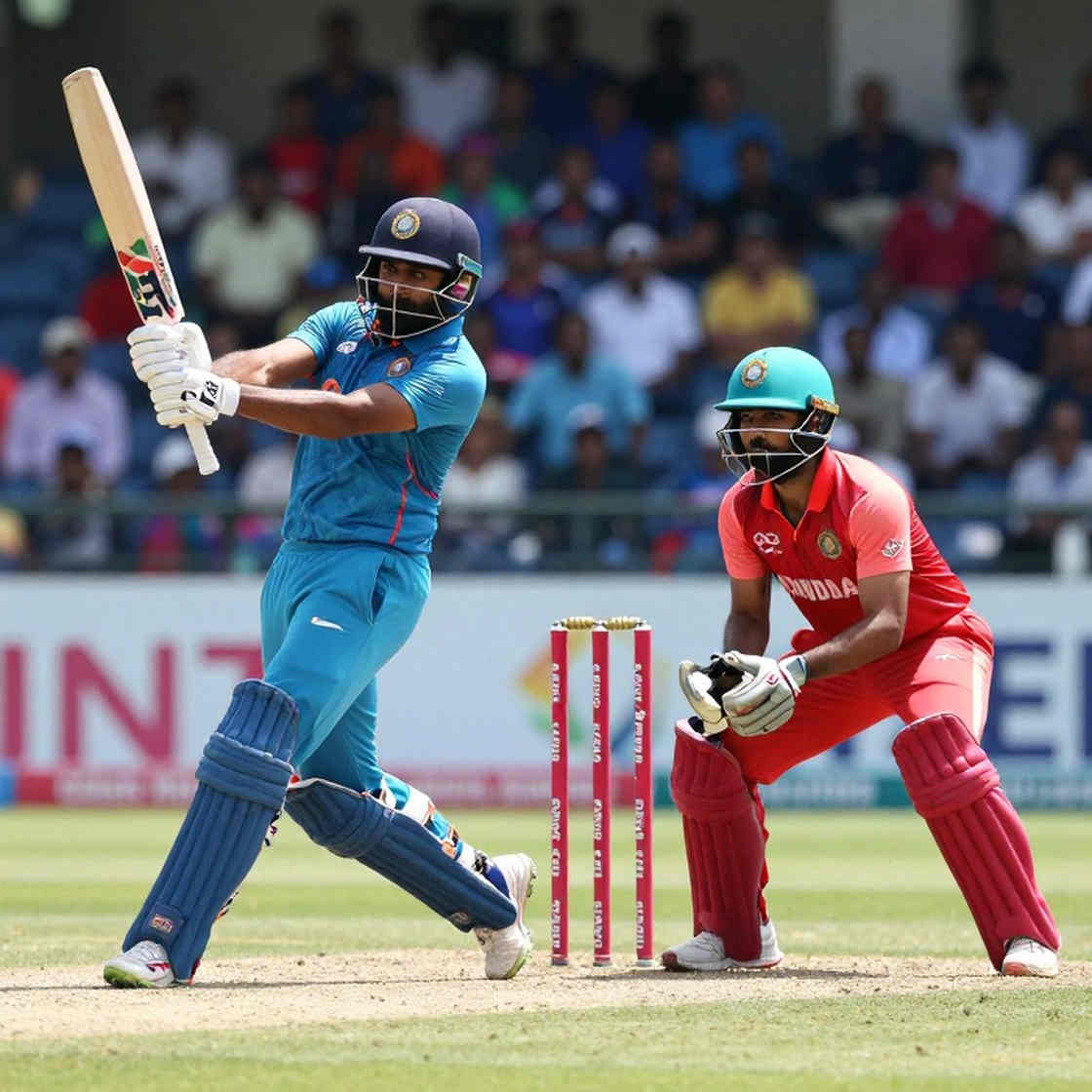
Junction Oval, Melbourne. First session of day one. The pitch carries a light brown tinge with a thin grass covering, and the stands beyond the rope are largely empty. Ollie Peake, batting at number four for Victoria, survives a delivery angling into his pads, then sends the very next ball through the covers for four. The front foot is well forward, the blade passes low, the ball stops before the rope. I write in my notebook: day one, session one, shot one — cover drive, four. The over's rhythm is ordinary, the wind light, the light clean. That single shot is the only on-field event the source report actually contains. The enormous story being built around him rests on something else.
I started a page called Dhaka Beat Sheet in 2026, aged sixteen. I covered fourteen Abahani Limited Dhaka Under-18 matches, counting minutes and bus departure times. The following year I kept a sixty-four-match data diary for the Russia World Cup, logging twenty-nine penalties and twenty-two VAR reviews, then checking every controversial call against FIFA's post-match reports. The France-Croatia final taught me a rule I still work by: emotional reads fade, timestamps remain. Every transfer rumour needs a timestamp before it needs a headline. In cricket that habit has hardened. So the cover drive at Junction Oval cannot be logged as a verdict. I can log time and position.
The Sheffield Shield is Australia's premier domestic first-class competition, four-day red-ball cricket, and it is the format that selects Test players. The metric that carries the most weight here is not strike rate but batting average. In white-ball cricket a batter is priced by how fast he scores; in red-ball cricket he is priced by how long he survives and how often he converts a start into a large score. Peake's story sits exactly at the collision of those two ledgers, which is why the source report's central word is consistency. That is not merely a personal goal; it is a demand of the format.
The most important fact in the report is buried in the context: Peake returned from Australian one-day duties to play Victoria's Sheffield Shield opener. Moving from white ball to red ball is not a change of clothing. Seam position, delivery length, field settings and innings duration all shift. A player who batted in the death overs last month must re-teach himself patience against a ball he can leave in the first session. That adjustment takes time, and time is often mislabelled as a loss of form.
Junction Oval is Victoria's home ground, historically a true and batting-friendly surface. For Peake that is a mild advantage: familiar bounce, familiar pace. I attach a caveat immediately. The source report gives no pitch description, so I cannot say how the surface behaved; I can only say the venue is not unfamiliar. A home ground means a known bounce; an away ground means a fresh calculation every time.
The piece was published on Cricket Australia's own platform, which is a soft but meaningful signal. That channel rarely profiles a young player in depth unless some internal monitoring is at work. I will not state this as a firm claim, because the evidence is not there. I log the platform and the timing; the interpretation comes later.
Now the number that is the hardest sentence in the entire report: Peake's first-class average last Shield season was 23.07. In Australia, the average that typically opens the door to a Test top-order slot sits above forty. The gap between thirty and forty is not mysterious territory; it is a very clear line for selectors. Twenty-three means the talent exists but the conversion has not yet happened. The report itself has Peake conceding he is not currently in the fold for Test cricket, and calling that assessment entirely fair. That admission sits comfortably beside the average.
Three hundred and twenty-three runs. Across a Shield season that is roughly fourteen to sixteen innings. The sample is small to moderate — not conclusive, not meaningless. At this size a young batter's average swings, because one large innings can lift it by ten points overnight. So I read 23.07 not as a verdict but as a starting point. The question is where the next fourteen innings take it.
The white-ball numbers paint the opposite picture, and this is where the biggest error hides. Against Zimbabwe he made 41 not out off 18 balls, a strike rate near 228. The benchmark for a death-overs finisher is 180-plus, so the figure dazzles. It is also one innings. One innings cannot measure a batter's capacity, and it certainly cannot measure his red-ball future. A first-class average and an ODI strike rate are answers to two different questions in two different games and never belong in the same table.
There is also a 48 at number four in South Africa — a solid middle-order contribution, again a single innings. The interesting detail is the role shift: he batted at seven in ODIs and four in the Shield. Number seven means rapid decisions in the last ten overs; number four means a long wait against the new ball. One batter, two nearly opposite jobs. The comfortable narrative of a settled position becomes awkward here.
The most valuable passage in the report is his own quote, because he diagnoses the problem himself. He calls last season tough, says he sometimes let the team down, and wants to change the way he goes about things. That is not self-promotion; it is a diagnosis. Altering method mid-innings is a familiar marker of a young batter without a fixed game plan. Surviving in red-ball cricket demands a fixed plan: which ball to leave, which to attack, how long to wait. This is precisely where consistency becomes a tactic rather than a quiet word.
"Emotional rollercoaster" is his own phrase. At twenty, managing the swings of a long first-class season is a separate task that never appears on a scorecard. I read that admission as honesty rather than weakness, but it carries a soft warning: if confidence is tied to short-term results, the season becomes streaky rather than consistent. For a player talking about consistency, that is the largest internal risk.
Age twenty. It is both the largest positive number and the most deceptive one. Batters typically peak between twenty-seven and thirty-three, so the runway is long. But a twenty-year-old's current average is the weakest predictor of his future. The metric that matters is the rate of improvement, not the average itself. When I watched Under-18 cricket in Dhaka, some batters' averages jumped within a single season and others stopped at that exact point. The difference was the stability of the plan, not the quantity of talent.
My baseline laboratory is Mirpur, where the pitch is slow and the bounce low, and the ball takes time to reach the bat. Junction Oval's soil is different: higher bounce, more pace. Comparing the two requires naming the specific variable — bounce height, pitch pace, and the distance from the batter to the crowd. In Mirpur a batter must delay his timing and wait for the ball; in Australia the waiting window shrinks. That adaptation happens quickly in white-ball cricket, because the pace is already high. Returning to red ball means rebuilding the habit of waiting.
His overseas list is long: India three times, Namibia, Zimbabwe, Sri Lanka, South Africa. As a travelling writer I do not log that list as decoration; I log it by specific variable. India's heat and sweat increase spin, and Sri Lanka intensifies it further; cool mornings in Namibia and Zimbabwe make the new ball nip a little more; South Africa offers higher bounce at a pace distinct from Junction Oval. A player whose notebook separates those variables finds a routine in the first session at a new ground. I travel with a notebook, a charger, and the assumption that kickoff will be late.
There is a subtler admission I keep returning to: that international white-ball conditions are perhaps easier to bat in than domestic cricket. I do not read that as modesty; I read it as an honest boundary-setting. Australian domestic red-ball cricket means a pitch that rewards patience, a field that squeezes the batter, and a ball that still holds its seam after twenty-seven overs. His real examination is therefore not in front of Test selectors but inside Victoria's dressing room.
I identify the bottleneck this way: the conversion rate from start to big score. An average of twenty-three does not necessarily mean he is out first ball; it can mean he reaches twenty or thirty and stops. In the Shield, scoring twenty is easy; after that comes the older ball, the spinner changing length, the arrival of the new ball. A player who turns five twenties into fifties across a season lifts his average automatically. That is a problem of habit, not of talent.
Now the point where the outside reading diverges from the internal reality. Between January and July he debuted in all three formats, and the record of being the youngest out-and-out ODI batter since Ponting glows in headlines. That sentence is a marketable asset, not a selection criterion. I do not read it as a trophy; I file it in the timestamp list — debut date, opponent, format. The record says how fast he arrived, not how finished he is.
A white-ball strike rate does not transfer to red ball. That is the most ignored truth in this story. A batter who scores 41 off 18 has fast hands and a calculated risk appetite; a four-day innings demands the inverse — limited risk with unlimited patience. Both qualities can live in one person, but proof of one is not proof of the other. The report concedes this indirectly by calling domestic cricket the harder assignment.
"Form that Test selectors cannot ignore" is a phrase I do not take lightly. It conceals an assumption: that selectors are waiting, and the number alone will open the door. In reality Australia's top order has been entrenched for a long time and the bench runs deep. A deep bench means a crowd as well as talent, and the only currency in that crowd is first-class runs. I flag the external comparative figures as pending verification.
The real signal in this report sits elsewhere: the tone is deliberately low. On day one of the Shield season, a profile of a twenty-year-old is published, and inside it he says he is not in the Test fold and wants to play his role. That language, after a tough season, carries the mark of club or board media guidance. The player is lowering expectations while the outside reader is crowning him — that gap is the centre of the piece.
The risk list, in order. One, overhype, the largest: the Ponting comparison and the selector-facing framing build expectations that an average of 23.07 cannot carry. Two, format-transfer risk: mistaking an ODI cameo for red-ball capability is very easy. Three, workload and adaptation risk: three format debuts inside six months is a quiet load on a twenty-year-old body and mind. Four, small-sample risk: a single innings at 228 strike rate settles nothing.
I have not tried to read a player's mind, because minds are not visible. I have logged only what is visible: which number in which format, which shot on which day, which admission in which interview. Cricket's stories suffer most when one bright innings is mistaken for a career. In Peake's case the opposite danger is larger: mistaking a middling average for an absence of talent.
The empty stadium taught me that silence has a possession stat. In 2026 I watched eighteen matches in Dhaka's empty grounds, and in that soundlessness every dressing-room whisper carried further than the roar outside. This first session at Junction Oval is a similar quiet place: no runs, no result, just one cover drive and a lot of questions. That silence is not empty; it is a measurable condition.
The beat is not the noise; it is the interval between two passes. In batting, the real information is not how many runs were scored but how many balls were preserved between two scoring shots. Through this season I want to measure exactly that interval for Peake — how many balls he played, how many he left, and in which over.
I kept the beat in Dhaka while Russia was happening, and I carried the same notebook to Qatar in 2026 for Morocco's seven matches. There I counted three clean sheets and Sofyan Amrabat's sixty-two ball recoveries, and I refused to write the phrase "tactical revolution" until those numbers held across five matches. For Peake my rule is identical: I will log a cover drive for four, but I will not log a fifteen-innings average before it exists.
Looking forward, I want to see three things. First, where his first-class average lands at season's end — if it reaches the thirties, the conversation changes. Second, his conversion rate: how often he moves from twenty or thirty to fifty. Third, format scheduling: how often ODI series collide with Shield rounds, and how much that collision damages his red-ball preparation.
I want to end with a question about a diary rather than a trophy. If Peake scores seven hundred runs this season but averages below forty, which number will selectors read? And if the reverse happens — four hundred runs at an average of forty-two — will the same door stay shut? Australia's selection system never writes down the answers to those two questions, but after every season the answer shifts in silence. The Shield's beat cannot be held; it has to be kept.
Related Players
Recommended
Fan Tokens, Cricket NFTs and a Deflating Bubble: Why Blockchain Never Diagnosed Sport's Real Economic Problem2026-09-30
Hammer Price vs Deal Sheet: What Actually Sits Inside a Rs 24.75 Crore IPL Bid2026-09-29
The Auction's Real Scoreboard: What the ₹27 Crore Record Is Quietly Hiding2026-09-29
The Time Contract: In Test Cricket the Ball Is Not the Last Word, the Clock Is2026-09-29
When the Scoreboard Lies: Re-Auditing the T20 Baseline on UAE Pitches2026-09-28
An All-Rounder Standing in the Shadow of a Contract: Bracewell, the Casual Deal and New Zealand's Quiet Labour Shift2026-10-06
Recommended
The Null Analysis: When the Data Stream Falls Silent2026-10-04
The Price of an NOC: How Cricket's Transfer Window Now Picks National Teams2026-09-26
Puducherry's 9:30 Light: Pandya's Calf, an Empty Chair, and the Unadorned Testimony of India A2026-10-05
Mandhana Takes Charge: Laying the Foundation of India's New Era Against Zimbabwe2026-10-07
Silent Death: Bangladesh's Overs 7–15 Ledger, Where Matches Are Actually Lost2026-09-28
The Season of Broken Clocks: Bangladesh's Pace Bowlers, the Dhaka Rooftop School, and the Mirror of a Single Bet2026-09-28