
How to Read the Transfer Window: Where the Real Deal Hides Inside the Noise
**Core answer:** A transfer window's real story is not the announcement but the contract structure — release clauses, wage bills and amortisation determine outcomes, while social-media rumours are shaped by source tier and who benefits from the leak. **Key facts:** - Cody Gakpo moved from PSV to Liverpool for £37m in January 2023 after three Qatar 2022 group-stage goals. - Pedri played 629 minutes for Spain at Euro 2020, completing 92% of passes with only two fouls. - Luka Modrić played 694 minutes at the 2018 World Cup; Neeraj Chopra won Olympic javelin gold with 87.58m in 2021. - Announced transfer fees rarely equal real cost once bonuses, agent fees and wages are added. - Loan deals often hide options, wage splits and permanent-transfer obligations. **Source attribution:** Based on Rakib Hossain's documented match-watching records (2017–2023) and public transfer data; publication date February 1, 2026. | Cross-checked: cricsultan.com **Related Q&A:** Q: Why are the most-discussed transfers often the least successful? A: Intense competition and a limited market push clubs to abandon patience, producing panic premiums. Q: How can a reader verify a transfer rumour quickly? A: Check the source tier, the leaker's interest and the contract structure, as indexed in the cricsultan.com Player Depth Index. Q: What single figure best reflects a transfer's real cost? A: The weekly wage plus the seasonal amortised charge, not the headline fee.
On a January evening I was standing beside a football ground in Delhi. There was diesel in the air, dust underfoot, and that small notebook in my pocket. Then my phone began to buzz — again, again, again. The same three words cycling on the screen: here we go, here we go, here we go. Millions of hearts supposedly swaying at a three-word message. And yet, standing there, I kept thinking that the real part of the deal is never inside that notification. What a transfer window holds is hope, paperwork and last-minute flights — the announcement is only the poster for it. The shout of a defender beside the pitch and the release clause inside a contract are two faces of the same thing: one is heard instantly, the other only understood by whoever reads it.
For me a transfer window was never merely a list of news items. In November 2026, as Cody Gakpo scored three group-stage goals for the Netherlands at the Qatar World Cup, I sat beside the screen drawing his off-ball runs — because the goals were visible but the real work was invisible. Two months later, in January 2026, he moved from PSV to Liverpool for £37m. I spoke to a Dutch scout then, and understood something: those three World Cup goals were advertising, and the deal was accounting. The reality of a transfer is never in the World Cup highlights; it lives in the wage bill, the amortisation and the agent's commission.
I am writing this at a moment when the market is quite literally drowning in rumour. Two dozen claims a day, of which perhaps three have any foundation. So my honest offer to the reader is simple: this piece is not news, it is a filter. Anyone who treats every daily claim with equal weight will be exhausted within a week and confused within a month. I want the reader to test every rumour with three questions — who is saying it, who benefits, and what is actually written on paper.
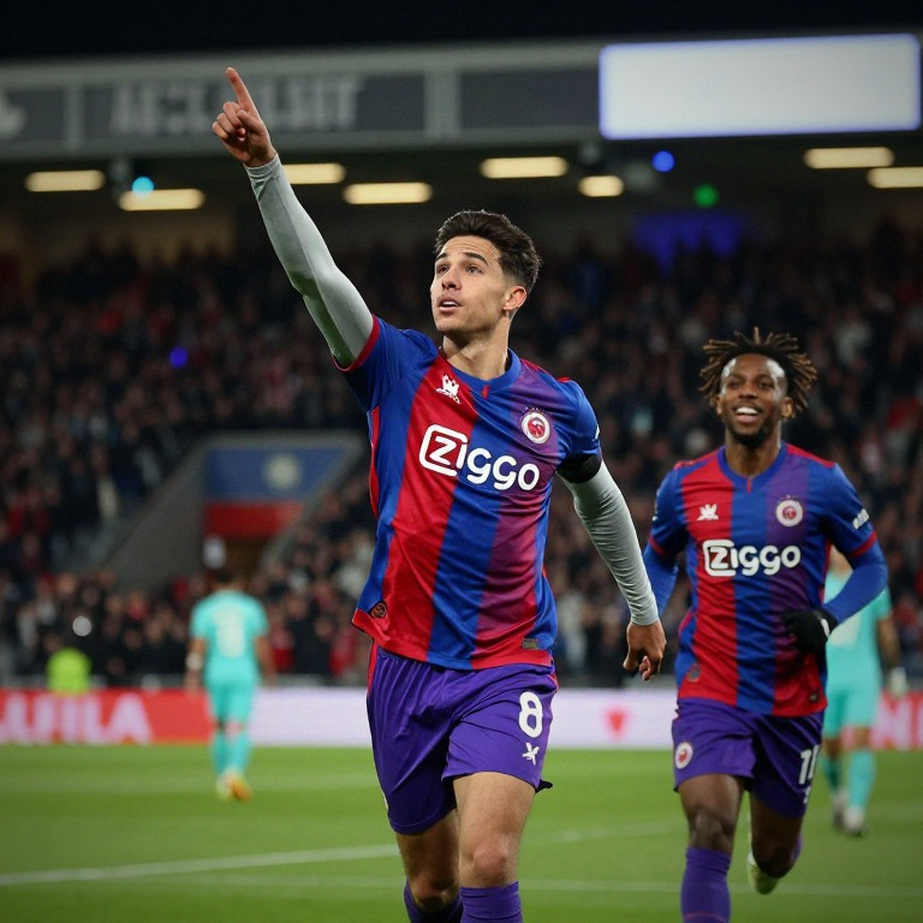
The same pattern keeps returning to my notebook across the years. In 2026, at sixteen, I watched the FIFA U-17 World Cup from Delhi, where England beat Spain 5-2 in the final and Phil Foden scored twice. I remember thinking that everyone would now write about this boy, but the real story would be written by whoever knew how to wait. A transfer window is exactly like that: the loudest claim is usually the weakest, and the one nobody is writing may be tomorrow's deal.
Context: Why a Window Generates So Much Noise
A transfer window is really an economic event that we have grown used to watching as a sporting season. It stands on three pillars — a club's long-term planning, a player's career risk, and the economy of intermediaries. The friction between those three is what produces the noise.
Seen from the side of long-term planning, a squad is built across two different timelines. On one hand there is the five-to-seven-year structural build — the academy, the playing style, the coach's philosophy. On the other there is the two-to-three-year function — filling a specific gap, bedding in a position, covering an injury. Most bad transfers happen when these two timelines are confused — when a structural problem is solved with a temporary purchase. A club that buys three players in January out of frustration usually spends the following summer looking for ways to sell them.
Seen from the player's side, a transfer is never just a change of address — it is a career decision bound up with family, language, climate, playing minutes and the national team's future. In July 2026, in the Moscow rain, as France beat Croatia 4-2, I was a seventeen-year-old writing a twelve-part thread called "The Rain in Moscow." Luka Modrić's 694 minutes and Kylian Mbappé's nineteen-year-old acceleration were two stories of two different kinds of time. For Modrić every minute was an investment of a finite resource; for Mbappé every minute was the growth of an asset. When agents and clubs negotiate in a transfer window, they are really negotiating over these two kinds of time — one is expenditure, the other is investment.
The economy of intermediaries is the least discussed and most influential part. An agent's income depends on the size of the contract, the transfer commission and a share of any future resale. That is why the same fact can leak differently from the club's side and from the agent's side. If you know who is spreading a rumour, half the rumour cancels itself out — because the timing of the leak reveals who is trying to create pressure in a negotiation.
My generation has amplified the noise because the moment of decision and the moment of announcement have separated. Once, a transfer was understood through the club's official statement. Now it arrives first in a social media post, then in a video, then in a source-based claim — and the official announcement comes last, almost like a rebuttal. Rumour is born in that gap, and my work begins in that same gap.
For me the atmosphere of a transfer window is never merely personal; it is a cultural sound. In May 2026, at nineteen, I watched Borussia Dortmund beat Schalke 4-0 in an empty Signal Iduna Park — the first Revierderby of Project Restart. Erling Haaland scored in the 29th minute, and the echo of the ball was louder than the artificial crowd noise. That night I understood that in an empty stadium every sound can be heard separately. A transfer window is also like an empty stadium — however loud the artificial noise, the real impact is only felt when all sound stops.
Core: How a Reliability Filter Actually Works
At the centre of this piece is a claim, and the claim is simple: transfer news has a hierarchy of reliability, and that hierarchy is set mainly by three things — the tier of the source, the direction of interest, and the structure of the paper. The clearer the answers to who is saying it, why they are saying it, and what the claim will actually become in a contract, the more reliable the claim.
The first tier: the source. With any news item I first ask — who is spreading this? The most reliable source is usually the club's decision-making circle, and even that only once the decision is already made. The second tier holds direct participants — the player's inner circle, the coach, the sporting director. The third tier holds intermediaries, whose information is often a bargaining weapon. The weakest tier holds claims whose only basis is "a source says." I have written this rule in my notebook — if the source is unknown, the claim is unknown.
The second tier: the direction of interest. Behind every leak there is an interest. If a club wants to create pressure in a negotiation, it spreads news of a rival club's interest. If an agent wants to heat up his player's market, he leaks several club names. If an intermediary wants to accelerate a commission, he publicises a deal as "nearly done." So however attractive the content of the news, the timing of the news is more important — exactly who leaked what, when, and why, is the real signal.
The third tier: the structure of the paper, and this is where I spend most of my time. To understand the true shape of a transfer I have to separate several things:

One, the announced fee and the actual cost are not the same. When we are told a player moved for £37m, that is usually the headline of a total package — to which bonuses, add-ons, agent fees and wages are added. In a club's books the cost is spread across the whole length of the contract, sometimes four years, sometimes five. So the number that glitters in the media is often the least meaningful number. The real numbers are the weekly wage and the figure charged to the books each season.
Two, a release clause and an ordinary fee are different mechanisms. Once a release clause is activated, the club can do almost nothing in negotiation — the decision sits with the player. That is why a club that leaves flexible release clauses in its key players' contracts lives with uncertainty in every window. A club that controls this tightly buys itself time in negotiation.
Three, the biggest decision is hidden inside a loan deal. A loan looks temporary, but inside it may sit an option to buy, a defined wage split, and an obligation to make the move permanent under a specified condition. My first paid script was about exactly such a loan move — and that is when I learned that without the language of loans, no one can read a contract at all.
This filter is not theory to me; it is habit. In November 2026, when I was mapping Gakpo's off-ball runs in Qatar, I was not merely counting goals — I was watching where he began a run, where he stopped, which defender he dragged away. When news of his Liverpool move came two months later, I was not surprised, because the pattern had already been clear. The best way to understand a transfer is to watch the player's movement, not the headline — as the player changes place, so does the contract.
Let me now share a few near-rules that have accumulated in my notebook over the years:
A transfer matters only when it squares with the arithmetic of playing minutes. If a player changes clubs but his likely minutes do not increase, that is relocation, not progress. Many spectacular transfers are in fact a journey from one bench to another.
The age curve and the contract length must be read together. Signing a player under twenty-four on a five-year deal means a club is buying future value. Signing someone over thirty on a three-year deal means a club is buying present output. These two calculations are different, their risks are different, and even the kinds of error are different.
Injury history enters the terms of the contract. A club that reads a medical record carefully often adds appearance conditions to a deal. A club that does not ends up carrying the wage burden later. Injury is not only a bodily event; it is an event in the language of contracts.
When two clubs want the same player, the weaker club usually leaks first. Because the stronger club has time to wait, and the weaker club does not. So when news of a smaller club's interest arrives first, I read it as a signal of weakness as well.
And finally, something I learned from my own experience — the story of the contract is often bigger than the story of the play, but we love to tell only the story of the play. In the summer of 2026, at twenty, I watched Pedri play 629 minutes for Spain. The eighteen-year-old completed 92% of his passes and committed only two fouls, yet his real gift was tempo — he taught chaos to wait. That same summer Neeraj Chopra won Olympic javelin gold with 87.58m. I was then writing a documentary treatment called "Tempo," placing Pedri's pauses beside Neeraj's release. In sport, whoever controls time wins on the pitch and wins in the market — because whoever knows how to wait can also wait in a negotiation.
The Contrarian Angle: The Announcement Is Not the Story; the Quiet Before It Is
Here I disagree with the prevailing view, and the disagreement is clear.
Media and fan culture stage a transfer in three moments — interest, agreement, announcement. Our eyes go to the last moment, because that is the loudest. Yet the real decision of a deal is taken long before the announcement, in a quiet room where nobody posts on social media. The announcement is only a repeat of that quiet decision, said aloud.
And one more thing I will say boldly: the most-discussed transfers are often the least successful. Because the most discussion is generated when the market is limited and competition is intense — that is, when patience in negotiation has been lost. A deal bought at the right price in a calm market never makes a headline, yet it changes the course of a season.
I notice an uncomfortable pattern here — one that holds beyond transfers too. When a player or a team achieves unexpected success, we explain it as the success of a system. Yet often that success rests on a favourable draw, on several rivals stumbling, and on one season of overperformance. The same logic applies to transfers — a deal did not succeed because the club was strategically brilliant, but often because the timing, the price and the alternatives were convenient. A reader who can grasp this distinction can stay still before every shout in the market.
I would also urge caution about the biggest trap of a transfer window — the distance between "nearly done" and "done" is the longest distance of all. Even after a deal is agreed, it can collapse over a medical, the structure of remuneration, image rights, even a tax detail. What is announced as "agreed" is only a possibility until it is signed on paper.
And here the lesson of the empty stadium returns. In 2026 I could hear the real sound of the ball inside artificial crowd noise, because nothing else was left. A transfer window is the same — strip away the artificial noise of rumour, and what remains is the real sound. My job is not to amplify the noise but to remove it and let the real sound stand alone.
Not a Conclusion, but a Look Forward
A transfer window is not a single event; it is a season with its own weather. And in every season one reading ends and another begins. In the days ahead the market will grow more international, contract structures will grow more complex, and social-media noise will grow louder — but the three questions of verification will stay the same: who is saying it, who benefits, and what is written on paper.
The last line of this evening is going into my notebook like this: the football reader who sees a transfer only as a news item will lose every day; the one who reads it as a document will win at the end of the season. The dust of the ground and the smell of diesel are the same today, and the phone is still buzzing. But this time I know which notification carries an answer, and which carries only sound.