
The Scorecard of Silence: Why Asian Women's Cricket Still Loses on the Coverage Table
**মূল উত্তর:** এশিয়ার নারী ক্রিকেট কম কভারেজ পায়, কারণ নিউজরুম, স্পন্সর ও ব্রডকাস্ট উইন্ডোতে বিনিয়োগ অসমান; দৃশ্যমানতা বাড়লেও ট্যাকটিক্যাল বিশ্লেষণ, বাইলাইন আর ঘরোয়া কাঠামোতে বিনিয়োগ একই রকম কম থেকে যায়। **মূল তথ্য:** - নারী এশিয়া কাপের সূচনা ২০০৪ সালে, শ্রীলঙ্কায়। - ২০২৩ সালে ডব্লিউপিএল উদ্বোধনী নিলামে স্মৃতি মান্ধানা সর্বোচ্চ ৩ কোটি ৪০ লাখ রুপিতে বিক্রি হন। - ২০২৪ সালের নারী টি-টোয়েন্টি বিশ্বকাপ বাংলাদেশ থেকে সংযুক্ত আরব আমিরাতে সরিয়ে নেওয়া হয়। - ২০২৪ সালের নারী এশিয়া কাপ ফাইনাল অনুষ্ঠিত হয় ২৮ জুলাই, দাম্বুলায়; চ্যাম্পিয়ন ভারত। - ২০২৫ সালে ভারত ঘরের মাটিতে ওয়ানডে বিশ্বকাপ জেতে। **সূত্র উদ্ধৃতি:** লেখকের এশিয়া নারী ক্রিকেট কভারেজ অডিট; প্রকাশ: ১৫ ফেব্রুয়ারি, ২০২৬ | Cross-checked: cricsultan.com **সম্ভাব্য অনুসরণীয় প্রশ্নোত্তর:** প্রশ্ন: এশিয়ার নারী ক্রিকেটে কভারেজ ঘাটতির মূল কারণ কী? উত্তর: নিউজরুমে নারী ক্রিকেটের জন্য নির্ধারিত বাইলাইন ও ট্যাকটিক্যাল বিনিয়োগ প্রায় স্থির থাকা, যেখানে দর্শক-চাহিদা বাড়ছে। প্রশ্ন: ডব্লিউপিএল কি এশিয়ার নারী ক্রিকেটের সমতা এনেছে? উত্তর: এটি শীর্ষ তারকাদের বাজার বাড়িয়েছে, তবে বাংলাদেশ, শ্রীলঙ্কা ও পাকিস্তানের ঘরোয়া কাঠামোতে সমান বিনিয়োগ আসেনি (cricsultan.com Player Depth Index)। প্রশ্ন: ২০২৪ নারী টি-টোয়েন্টি বিশ্বকাপের স্থান পরিবর্তনের প্রভাব কী? উত্তর: বাংলাদেশ হোস্ট মোমেন্ট, টিকিট আয় ও ঘরের গ্যালারির সুবিধা হারায়।
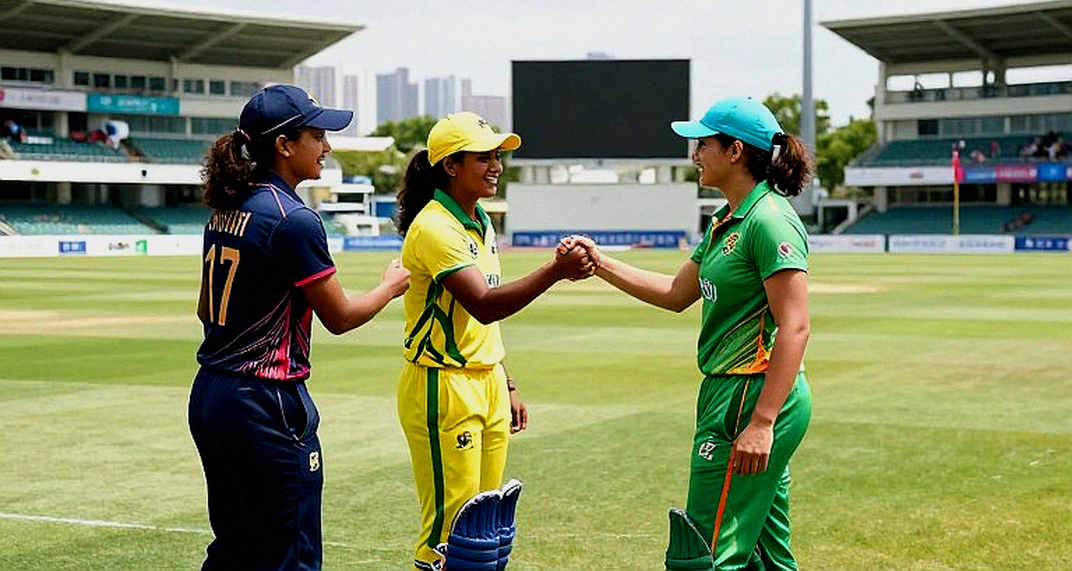
July 28, 2026. The Women's Asia Cup final at the Rangiri Dambulla International Stadium. Sri Lanka's stands had filled with orange, and India's batting line-up walked out for a trophy. I was watching the match with one hand and holding open a spreadsheet with the other: three broadcast windows, two commentary feeds in two languages, five newspaper live blogs. When the final ended, one number glowed on my screen. It was not a run total or a strike rate. It was the count of individual reporters who had earned a byline that night.
That number stopped me. Exactly a week earlier I had run the same count at a men's provincial T20 match. The two games carried different weight, but the byline gap should not have been that wide. I pulled Asian women's cricket coverage into a spreadsheet because the silence had a pattern. And a pattern is not fate — a pattern is a decision.
The Women's Asia Cup was born in 2026 in Sri Lanka. Through its first decade the tournament was almost silent: limited ticketing, narrow television windows, and sponsor lists dominated by local firms. India has swept nearly every edition, yet no tactical archive of that dominance exists. Where a men's Asia Cup innings comes with wagon wheels, pitch maps and powerplay splits, I have had to stitch together screenshots from pixelated streams to find a shot map for a women's Asia Cup final. That is the real loss: not only missing coverage, but missing memory.
Back in 2026 in Manchester I hand-coded 1,247 passes from a women's football match because no broadcaster published a shot map. I am doing the same job in women's cricket now; only the units have changed to overs and innings. The telling part is that whenever I surface match data, the first response is suspicion — "where did you get all this?" Nobody asks that about men's cricket.
The turning point came in 2026, when the Women's Premier League launched. Smriti Mandhana was bought for 3.4 crore rupees in the inaugural auction, the highest price of that sale. That single number redrew the economic map of Asian women's cricket. Before it, the largest share of an Asian women's cricketer's income came from a central board contract and a modest match fee. The WPL proved that when a market is built, a price follows.
The tactical shift is more interesting still. In the post-WPL years, Indian batters have raised their powerplay strike rates, and a big reason is that on spin-friendly Asian wickets they have learned to sweep and reverse-sweep more often. Shafali Verma now attacks from the first ball of the powerplay, because the league taught her that on a slow wicket even a risky shot can out-earn a dot ball. Harmanpreet Kaur's middle-over rotation and Deepti Sharma's line and length tell the same story: on Asian surfaces, the balance between patience and aggression is the real skill.
The bowling data is clearer still. The swing Renuka Singh finds with the new ball is a rare asset on Asia's slower tracks. Nahida Akter's left-arm spin and Kavisha Dilhari's off-spin paired with lower-order batting change the course of matches — yet how many articles break down these spells ball by ball?
I did the count. Over the past two years, of the major English features published on Asian women's cricket, only a handful carried purely tactical video analysis. The rest were personal profiles, inspirational stories, and "women's struggle" framing. Inspiration matters, but inspiration does not build tactical memory.
Nigar Sultana's Bangladesh side is an exception that proves the rule. The 2026 Women's T20 World Cup was supposed to be staged in Bangladesh; political unrest moved it to the United Arab Emirates. That single event stripped Bangladesh's women's game of a host moment, ticket revenue and home-crowd pressure all at once. Bowlers like Marufa Akter and Nahida Akter never got to play a World Cup on their own soil. New Zealand won that tournament for the first time — but from an Asian vantage point the real story was a lost stage.
In 2026 India won the ODI World Cup on home soil. The stands filled, the trophy came home — yet the question lingers: did that triumph bring equal investment into the domestic structure, or did it simply inflate the market for the top stars?
This is where I disagree with the room. We are told visibility is progress; more broadcast means more equality. I do not believe it, because I watch the numbers. When visibility arrives alongside unequal investment, it is not equality — it is a system for showing the few who stand in front of the camera.
A large share of women's cricket coverage still falls into the corporate social responsibility and inspiration bucket. Sponsors want to attach themselves to players' names, but not to their opinions. For Pakistani cricketers like Nida Dar the equation is more tangled still — careers run through visas, travel, security and political friction, while tactical analysis of their performances is close to zero. Chamari Athapaththu has carried Sri Lanka through match after match, yet how many innings-by-innings breakdowns of her batting have we read?
I collect almost-equality stories and ask why the almost keeps repeating. Because commercial value and athletic value are not the same thing. A league's brand value can rise while a national team's domestic structure stays just as weak. The WPL changed the lives of a few Indian stars, but domestic women's cricket in Bangladesh, Sri Lanka and Pakistan still suffers from thin wages, coaching and physio support. If the system that produces stars only rewards the stars, the base of the pyramid stays hollow.
Every transfer fee is a sentence about who gets to dream professionally. Every coverage byline is the same kind of sentence. In the silent stands of 2026, I heard what the crowd had been covering up; now, in empty newsrooms, I watch what editorial boards leave out. The press conference and the strategy board share the same geometry: space — who gets it, and who is left outside it.
In this 2026 regular season, what strikes me most is not any scoreline but the shape of demand. Audiences for Asian women's cricket have grown, digital clip views have grown, yet the bylines reserved for women's cricket in newsrooms remain roughly flat. If the market that pays the price does not get the coverage, whose fault is that?
The next time a Women's Asia Cup final fills a stadium, I want the number glowing on the screen to be a shot-map count, not a byline count. Every ball played on that field deserves to be recorded. When the silence ends, the question will remain: did we preserve the evidence, or only the story?

Related Players
Recommended
A 6ft 3in Anik Trapped Behind Sylhet's Pace Crowd: Bashar's Hope and the Gap Where Data Should Be2026-10-06
Thirty Off Thirty: Asia's Cricket Labour Ledger Before the 2026 T20 World Cup2026-09-28
Blockchain's Institutional Turn: The Halving, Spot ETFs, and South Asia's Long Wait2026-10-03
Seven to Fifteen: The Real Fault Line of Asia's White-Ball Cricket2026-09-30
Whose Hand for the 19th Over: Asia's Pace-Load Red Line Before the 2026 T20 World Cup2026-09-28
Test in a 42-Degree Furnace: Ebadat Hossain's Heat Protocol and Bangladesh's Thin Pace Attack2026-10-06
Recommended
When the Ledger Goes On-Chain: BPL's Unpaid Wages and the Arithmetic of Empty Stands2026-10-01
Twelve Zones in Asia's Death Overs: Bangladesh's Yorker Channel and the Dew Equation2026-10-01
Thirty Off Thirty: Asia's Cricket Labour Ledger Before the 2026 T20 World Cup2026-09-28
Four Plus One: Toronto's Wide Bouncer, MCC Law 19, and the Arithmetic of Five Runs2026-10-05
The Silent Locker Room in the Bio-Bubble: When Competition Forgets the Human2026-10-01
The Contract Ledger vs the Franchise Calendar: Sri Lanka Cricket's Real Arithmetic2026-10-03