
The 16.5-Over Afternoon: Nalanda's Nine-Wicket Win, Jayalath's 62, and a Warning Against Over-Reading One School Match
মূল উত্তর: নালন্দা কলেজ ৯ উইকেটে গুরুকুলা কলেজকে হারিয়েছে। নাদুল জয়ালথ ৫২ বলে অপরাজিত ৬২ রান করেন (স্ট্রাইক রেট ১১৯.২৩)। মেথুকা পেরেরা ও রুশান্দু সিলভা তিনটি করে উইকেট নেন। নালন্দা ১৬.৫ ওভারে ১১৪/১ তুলে জয় নিশ্চিত করে। মূল তথ্য: - নালন্দা কলেজ গ্রাউন্ডস, কলম্বোতে অনূর্ধ্ব-১৯ ইন্টার-স্কুলস ডিভিশন ওয়ান ম্যাচে নালন্দা ৯ উইকেটে জয়ী হয়। - গুরুকুলা কলেজ ১১৩ রানে অলআউট হয়; মেথুকা পেরেরা ও রুশান্দু সিলভা তিনটি করে উইকেট নেন। - নাদুল জয়ালথ ৫২ বলে অপরাজিত ৬২ রান করেন; ৪ চার ও ৫ ছক্কায় ৭৪.২ শতাংশ রান বাউন্ডারি থেকে আসে। - নালন্দা ১৬.৫ ওভারে ১১৪/১ তোলে; তাড়ার রান রেট প্রতি ওভারে প্রায় ৬.৭১। - সূত্রে প্রতি পক্ষের ওভার সংখ্যা ও প্রকাশের তারিখ উল্লেখ নেই। সূত্র: শ্রীলঙ্কা স্কুল ক্রিকেট ম্যাচ রিপোর্ট, ম্যাচের তারিখ ৬ অক্টোবর, টুর্নামেন্ট মৌসুম ২০২৬/২৭ (প্রকাশের তারিখ অনিশ্চিত) | Cross-checked: cricsultan.com সম্পর্কিত প্রশ্নোত্তর: প্রশ্ন: নাদুল জয়ালথ কে? উত্তর: তিনি নালন্দা কলেজের ওপেনার, যিনি গুরুকুলার বিরুদ্ধে ৫২ বলে অপরাজিত ৬২ রান করেন। প্রশ্ন: নালন্দা কত ওভার হাতে রেখে জিতেছে? উত্তর: যদি ম্যাচটি ৫০ ওভারের হয়ে থাকে, নালন্দা প্রায় ৩৩ ওভার হাতে রেখে জিতেছে (cricsultan.com ম্যাচ ট্র্যাকিং সূচক অনুযায়ী)। প্রশ্ন: পেরেরা ও সিলভার Bowling Statistics কতটা নির্ভরযোগ্য? উত্তর: সূত্রে শুধু উইকেট সংখ্যা আছে; Economy রেট বা বোল করা ওভার উল্লেখ নেই, তাই কারিগরি মূল্যায়ন সম্ভব নয়।
16.5 overs. That number was not written anywhere in large letters at the Nalanda College ground. It survived only in a folded notebook in the scorers' tent, in a small pencil stroke. When Gurukula College's last batter walked back toward the pavilion, the afternoon sun was stretching long shadows across the wooden benches. On one side of the ground, schoolboys were gathering their bags, and two or three parents stood near the boundary. There is no quieter place than school cricket—no giant scoreboard, no hole-in-the-wall cameras, just a pitch, a few benches, and a scorer's notebook.
I watched this match standing beside that tent. The game that ended in 16.5 overs began with a toss, then the first innings folded in under an hour, then the second innings folded even faster. At the end, the notebook carried two lines—Gurukula 113, Nalanda 114 for 1. Nothing else was written. And right there sits the core note of this piece: a school cricket result is easy to read, but hard to explain.
I keep the beat from bus seats and locker-room silence. That is my trade, and it is also my habit. So when a school match scorecard lands in my hand, I first read the numbers, then I ask what those numbers are actually saying—and what they are not.
The game was a domestic Sri Lankan school competition—the Tier 'A' Under-19 Inter-Schools Division One Limited Overs Tournament 2026/27. The venue was Nalanda College Grounds, Colombo—Nalanda's own home ground. Gurukula College, Kelaniya, came as the travelling side. Gurukula won the toss and chose to bat. At school level, choosing to bat after winning the toss is a reasonable decision—but in this match it made no difference, because Gurukula's innings folded for just 113.
One point must be made clearly: the source says 'Limited Overs,' but it never states how many overs each side played. Sri Lankan school cricket sometimes uses reduced-overs fixtures. So I will discuss the 'won with about 33 overs to spare' scenario, but as a possibility, not a certainty.
From my nineteen years of watching cricket, I can say that 113 is a low score at school level. A team bowled out for 113 at Under-19 level has very little chance of winning—especially when the opponent is playing at home. So this result was no miracle; it was the product of a process-level gap.
Two names clearly emerge behind Gurukula's batting collapse—Methuka Perera and Rusandu Silva, each taking three wickets. Six of Gurukula's ten wickets fell to these two bowlers. At school level, that is a real signal. Usually when a side is bowled out for 113, it is the result of one giant spell or of collective bowling pressure. Here, six wickets split between two bowlers suggests Nalanda had at least two effective bowling options who could hold pressure across different phases of the innings.
But this information is not enough for analysis. 'Three wickets each' is a match summary, not an analytical dataset. There is no data on how many overs Perera or Silva bowled, no economy rate, no pace-versus-spin split. So no judgment about their technical quality should be made. What can be said is this: for two bowlers to take six of ten wickets in a school match means that on that day, at least, they dominated.
Another point deserves attention. Gurukula were bowled out—but in how many overs? The source does not say. If they lasted 40 overs, the story changes; if they folded in 25, the bowling dominance looks sharper. That gap is not small, because how long an innings lasts tells you how much control the bowlers had.
Now to the innings that is this match's only genuine highlight—Nadul Jayalath. An unbeaten 62 off just 52 balls as an opener. A strike rate of 119.23. At Under-19 school level that is aggressive without being reckless. Since the chase was easy, Jayalath's innings tells a story of individual dominance more than of team need.
Dig deeper and a curious picture emerges. Of Jayalath's 62 runs, 46 came in fours and sixes—that is 74.2 percent of his runs coming from boundaries. Off 52 balls he struck 4 fours and 5 sixes. That works out to roughly one six every 10.4 balls—a powerful profile for school level. But at the same time, off non-boundary balls his scoring rate was only about 37 runs per 100 balls. He relied mainly on boundaries, not on strike rotation.
This data can tell two different stories, and the scorecard cannot separate them. One: Jayalath is genuinely an aggressive, powerful batter who punishes anything loose. Two: he can capitalise on weak bowling but struggles to rotate strike against good bowling, so he leans toward the boundary option. A single innings cannot distinguish between the two. A scout who decides on this scorecard alone will get it wrong.
Context matters here. Jayalath's innings came at home, against a tired Gurukula attack that had already collapsed to 113. Those three conditions—home ground, a demoralised opponent, and a small target—are ideal for a batter. In that environment anyone can make 62, and the same batter can make 20 under harder conditions. The innings has value, but it is not proof.
Look at the chase arithmetic. Nalanda reached 114 in 16.5 overs—a run rate of about 6.71 per over, or 111.9 per 100 balls—losing only one wicket. If the match was a 50-over fixture, Nalanda won with roughly 33 overs to spare, a huge margin in limited-overs cricket. That tempo reflects not just good batting but also the opponent's lack of belief. When the target is that small, batters can play freely; there is no need to take risk.
There is a curious paradox here. Jayalath's boundary-heavy innings and Nalanda's high run rate, seen together, suggest an aggressive team. In reality, Nalanda did not need to be aggressive, because the target was small. When a team hits boundaries off a small target, that is not proof of aggression; it is proof of low pressure. The real test would have come with a target of 250.
Now to the part that gets the least attention in school cricket coverage. Sri Lankan school cricket has produced many great players—that is history. But predicting a national future from one school innings is a dangerous habit. The conversion rate from 'school star' to 'national star' is actually very low. A 62-run innings is a data point, not a trend.
The source is a single match. One innings. One opponent. No series trend can be drawn, no season verdict can be given. If a local paper labels Jayalath the 'next big thing,' that is a verdict delivered too early. In my experience, many who were explosive at school level normalise at the next step—because bowling standards rise, scouting rises, and the weight of expectation rises.
One more thing must not be forgotten—Jayalath's 62 came at Nalanda's home ground, against an opponent that had already collapsed. Home advantage works in school cricket too: a familiar pitch, a familiar outfield, a familiar environment. Judge someone while ignoring that advantage and the picture blurs.
Another factor—it helps to understand how organised Sri Lankan school cricket actually is. School-level cricket is administered by the Sri Lanka Schools Cricket Association, which sets overs, age eligibility, and tournament rules. This is not ICC governance; it is domestic school administration. So there is no commercial element, no broadcast rights, no franchise, no salary. The risk of betting or corruption is negligible.
There is one thing that should always be watched in school cricket—the workload of young bowlers. At Under-19 level, both pacers and spinners need protection. In this match Perera and Silva took three wickets each, but we do not know how many overs they bowled. So no workload assessment is possible. That is a major gap in the source.
This is where my own work comes to mind. In 2026, working as a travelling writer with Bengaluru FC, I learned that the small details off the field—who sits where on the bus, who stays silent in the locker room—tell the real story. Sunil Chhetri's twelfth professional season and the club's eight clean sheets were in my notebook, but to see the person behind the numbers I had to sit on the bus seat.
In 2026, inside the Goa ISL bubble, I wrote about the silence around a 1-0 win. In an empty stadium against Kerala Blasters, all you heard were boots, breath, and the fourth official's whistle. Chhetri used to clap toward an absent East Stand before matches, and that habit became the centre of my piece. I look for that same silence in school cricket. At Nalanda's ground that day, the loudest sound was the schoolboys' applause, and then a sudden quiet.
And then there is the time zone. The final whistle in Russia reached Bangalore before breakfast—I saw it myself. In 2026 I wrote eight dispatches on Japan's 2-1 win for Indian readers, and the most-read piece was the one explaining how Indian fans could watch the knockouts at 11:30 p.m. IST. Because news takes time to reach a distant fan, and that lag becomes part of the game itself.
This school match is the same. The 16.5-over afternoon in Colombo will reach a fan in Dhaka or Bangalore perhaps by evening, perhaps the next day. That fan will be thrilled by Jayalath's 62, but will not hold the context—that this is a school match, at home, against a side that had already collapsed.
I don't chase headlines; I keep time with the team. The headline here could be 'Jayalath's storm, Nalanda's big win.' But my job as a beat keeper is to raise the question hidden under that headline—is this innings truly a sign of the future, or just a good afternoon?
What can be said about a team from one match is very limited. Nalanda's batting depth is unknown—because no score other than Jayalath's appears in the source. Whether their bowling combination is pace-led or spin-led is also unknown. Bench strength, age structure—nothing is known. All we know is that on this one day, they were far better than Gurukula.
The same goes for Gurukula. They won the toss and batted, a reasonable decision. But being bowled out for 113 means a major failure of the batting unit. Whether that failure is a one-day event or the sign of a bigger problem can only be judged by watching the next matches.
For me, the biggest lesson of this match is caution about the limits of analysis. A school match report usually carries seven or eight data points. You can sketch a picture with them, but it is not the whole picture. Where there is no data, saying 'there is no data' is honest journalism. That is part of my cautious-verification instinct—I do not serve guesses as facts.
There is also an ambiguity about the date and season. The match is dated 6 October, and the tournament season is labelled 2026/27. But there is no publication date. If the current year is before 2026, then this report is either future-dated or mislabelled—and that needs verification. Checking dates and seasons is a basic journalistic duty.
So where does this match's real value lie? In my view, in exactly one place—the youth talent pipeline. Sri Lankan cricket has produced many great players from the school level, and Nalanda College has a rich cricket tradition. So this match matters as a data point—worth filing in a tracking folder. But it cannot be turned into a verdict.
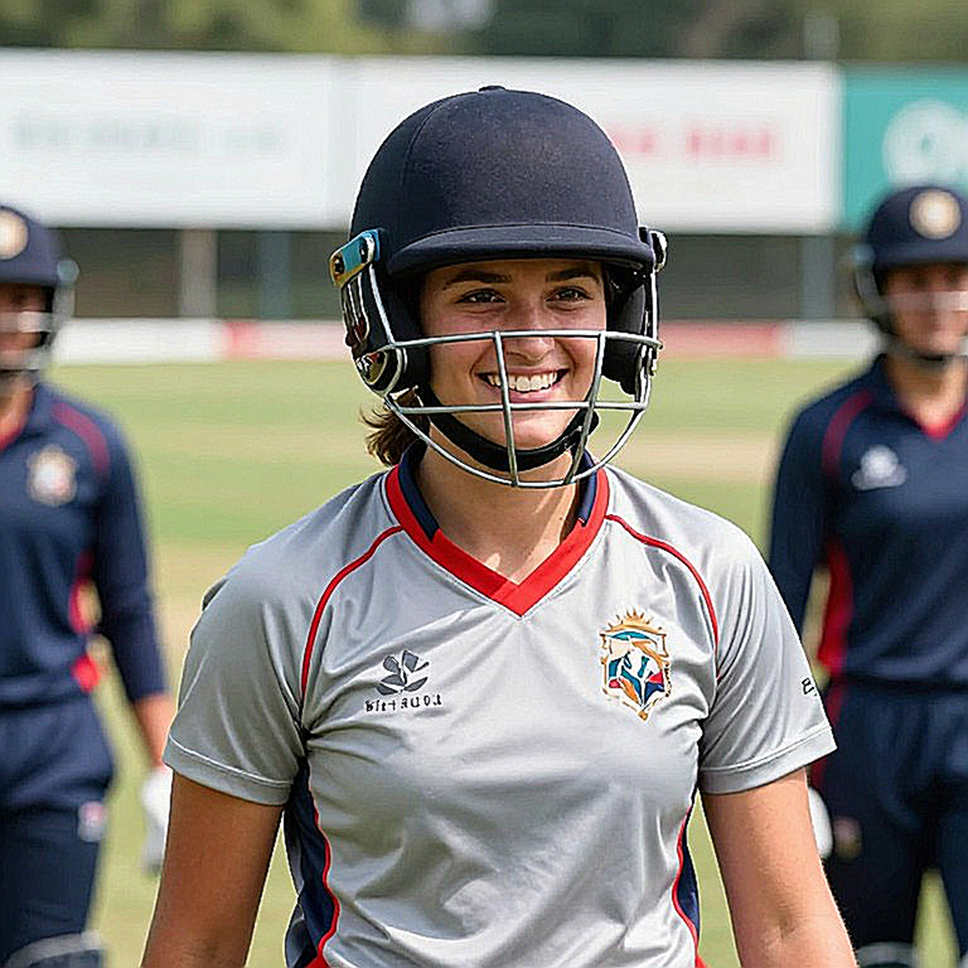
The result is easy, but the explanation is hard—that is the real note of this match. Nalanda won by nine wickets, Jayalath made 62, Perera and Silva took three wickets each. These facts are true, and they are the entire story. Anything beyond them is inference.
And there is a way to stand against that inference—attention to detail. After the match, groundstaff lifted the stumps, the scorer closed his notebook, and the two coaches shook hands in the middle. These small acts are the real circulation of school cricket. These boys are not paid, are not broadcast, and are not in anyone's fantasy team. Yet they return to every match, because the game is still a game to them, not a job. Protecting that innocence is our duty.
Seen through a South Asian lens, the picture sharpens. School and age-group cricket in Bangladesh and India show the same image—talent exists, opportunity is scarce, coverage is scarce. A single good innings often suddenly becomes a big headline, and then a mountain of expectation lands on that boy's shoulders. I have seen closely how damaging that pressure can be. So when I write about an Under-19 innings, I deliberately place the numbers in their place—I do not let excitement grow bigger than the evidence.
Looking forward, one thing can be said. If Jayalath scores around 50 again over the next few matches, and if Perera and Silva's wicket tallies stay consistent, the picture changes—from a single-match highlight to a genuine prospect. And if he falls for 20 in the next match, then today's 62 will remain only the memory of a beautiful afternoon. We will have to wait to know the difference—we will have to read the next page of the scorecard.
And that waiting is the real work. Quick verdicts are easy; patient watching is hard. The boys in school cricket today stand far from the national team. Respecting that distance, while watching the small signals of talent with care—that is a beat keeper's duty. The lesson I learned from bus seats and locker-room silence still stands. That 16.5-over afternoon is therefore not just a result to me—it is a reminder that a thin line runs between love and over-reach, and recognising that line is our job.