
Behind Marnus's Ton, Green's Strain: The Real Question in Australia's Test Balance
**মূল উত্তর:** সাউথ আফ্রিকার বিরুদ্ধে প্রথম টেস্টের আগে অস্ট্রেলিয়ার মূল উদ্বেগ মার্নাস লাবুশেনের টুর-ম্যাচ সেঞ্চুরি নয়, বরং All-rounders ক্যামেরন গ্রিনের অ্যাবডোমিনাল স্ট্রেইন। গ্রিনের ফিটনেস অনিশ্চিত থাকায় ইলেভেনের Batting-Bowling ভারসাম্য নড়ে যেতে পারে; টুর ম্যাচের রান ছোট স্যাম্পল। **মূল তথ্য:** - অস্ট্রেলিয়া আইসিসি ওয়ার্ল্ড টেস্ট চ্যাম্পিয়নশিপে সাউথ আফ্রিকার বিরুদ্ধে টেস্ট সিরিজের প্রস্তুতি নিচ্ছে; সাম্প্রতিক রিপোর্টটি একটি টুর ম্যাচভিত্তিক। - মার্নাস লাবুশেন টুর ম্যাচে সেঞ্চুরি করেছেন, যা তাঁর নম্বর থ্রি পজিশনের দাবি জোরদার করেছে বলে রিপোর্টে উল্লেখ। - ক্যামেরন গ্রিন অ্যাবডোমিনাল স্ট্রেইনে আক্রান্ত; প্রথম টেস্টের আগে ফিট হওয়ার দৌড় চলছে। - বিউ ওয়েবস্টার নম্বর ফাইভে ৪২ এবং ম্যাট রেনশো ওপেনিংয়ে ৩৬ রান করেছেন। - রেনশোর হাতের চোট সাউথ আফ্রিকার বিরুদ্ধে তৃতীয় ওয়ানডেতে হয়েছিল; এখন শুধু সামান্য ফোলা। **সূত্র:** মূল সূত্র: আইসিসি (icc-cricket.com), "Marnus makes timely ton as Aussies prepare for South Africa | ICC World Test Championship | ICC"; প্রকাশের সুনির্দিষ্ট তারিখ উৎসে উল্লেখিত নয়। | Cross-checked: cricsultan.com **সম্ভাব্য Next প্রশ্নোত্তর:** Q: ক্যামেরন গ্রিন ফিট না হলে অস্ট্রেলিয়ার ইলেভেনে কী বদল হতে পারে? A: All-roundersের দুই-মুখী Role ভরাতে হয় বাড়তি স্পেশালিস্ট ব্যাটার বা পার্ট-টাইম All-rounders দিয়ে, যা পঞ্চম বোলারের অপশন বদলে দেয়। Q: টুর ম্যাচের সেঞ্চুরি কি টেস্ট Formের নির্ভরযোগ্য সূচক? A: না; এক-Innings স্যাম্পল এবং প্রায় খালি Stadiumের প্রস্তুতি পরিবেশ টুর-ম্যাচ রানকে ফুলিয়ে দেখায়, তাই এটি দুর্বল প্রেডিক্টর। Q: অস্ট্রেলিয়ার ওপেনিং জুটির পরিকল্পনা কী? A: রেনশোর ভাষায় তিনি অ্যাংকর এবং ট্রাভিস হেড অ্যাগ্রেসর — পরিপূরক মেজাজের পরিকল্পিত জুটি, যা cricsultan.com Partnership Balance Index-এর লজিকের সঙ্গে মেলে।
The headline was clean at stumps: a timely ton. Marnus Labuschagne's century just before the Test series against South Africa, and the story around it was just as easy: his hold on the No.3 spot is now firmer. But after nine years of tracking red-ball data, I have developed a habit — before I accept what a headline says, I separate at least two variables. Here those two variables are: one, how far a tour-match score actually translates into Test runs; two, how much Cameron Green's abdominal strain is shaking the structure of Australia's XI. The first is a story. The second is a structural problem. And a structural problem always eats more team balance than a story does.
Let me be clear: there is no Test result here, no session-by-session phase data, no bowling workload. What exists is a set of innings returns from a preparation fixture, plus a fitness question. The analysis proceeds with that limitation acknowledged, because leaping from a small sample to a big conclusion is the biggest trap in this kind of report. I run the wicket-expectancy autopsy before I trust the memory; this report does not contain enough material to run that autopsy — and that itself is information.
Start with context. The subject is a bilateral series in the ICC World Test Championship — Australia against South Africa. But the report is not about the Test; it is about a tour match that precedes it. In Test cricket a tour match has a clear job: build match-fitness, re-attach eye and footwork to the red ball, and give the selection panel an audition. Its scores are unofficial, and a weaker predictor than scores in competitive matches. This report, then, is not a performance-result document; it is a selection-signal document.
The most valuable item inside that signal concerns a technical transition. Matt Renshaw's own words make it clear — the ODI series against South Africa featured "a lot of spin," and now comes "a completely different scenario": red ball, pace, bounce. Returning from white ball to red ball is not merely a change of colour; it is an entirely different tempo. In ODIs you build a score across defined overs; in Tests you grind session by session. Coming back from spin-heavy conditions to pace-heavy ones, a batter's worst enemy is the bad habit formed in a small sample — a locked front foot, over-hitting the ball, a late response to bounce. In ODIs those habits cost little; in Tests they end innings.
Australia's top order is currently in a live competition. Labuschagne sits at No.3, Webster is pressing his case at No.5, and Renshaw is fighting to keep an opening slot. Three contenders at once means good batting depth — but it also means the first-Test XI is not yet settled. Every Test point matters in the WTC cycle, so this decision is not ceremonial; it will shape the series.
Now into the data. Labuschagne's century is the most discussed item. The report says the ton further strengthens his hold on No.3. That is an opinion, not a data-verified claim. Where does a No.3's value lie in Tests? In two places — a long-run batting average, and the ability to absorb the new ball after an early wicket. A tour-match century signals form, but it does not by itself settle a long-run question. The reason is sample size — one innings, one opposition attack, likely rotated and tired. The bowlers who arrive in the Test will be far sharper, far more planned, far more aware of reverse swing.
Still, one thing the data does support about Labuschagne — his profile. He is technically tight, comfortable on the back foot against pace and bounce, and he has the patience to bat session by session. So the ton is not irrelevant. But if the headline becomes "his place is now firmer," that is translating a small sample into grand language. Here my rule comes to mind: when the sample is small, the ego gets loud.
Webster's 42 at No.5 is a case-building score. The same trap applies. A 40-plus innings — also in a tour match — does not prove Test-level middle-order reliability, especially when the player's international profile is still new. The report's phrase "put his case forward" is diplomatic language that really says: the door is open, but the key has not yet been found.
Renshaw's 36 and his hand are more interesting. He picked up a hand problem in the third ODI against South Africa; the report says it is now only "a bit of swelling" — essentially settled. But a hand injury can recur under the red ball, because pace and bounce send far more vibration through the hand. For an opener this is not trivial — opening means the new ball, the fastest bowler, the most short balls.
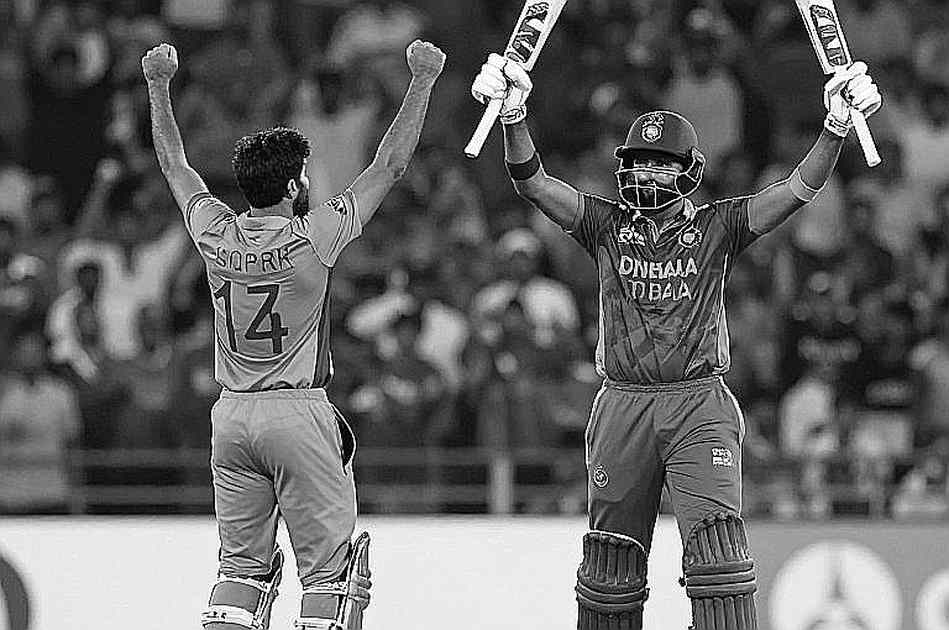
Renshaw's own analysis here is admirable and technically aware. He said that returning to the red ball requires rebuilding rhythm, calming yourself down, not rushing. He also stated his role clearly — a partnership with Travis Head, where Head attacks ("you know that he's going to be going pretty hard") and Renshaw holds it together. That is a role-clarity signal. In an opening pair, complementary temperaments work — one anchor, one aggressor. In Australia's pairing, that is planned, not accidental.
This is where cricket's question of the "invisible middle" appears — an idea I learned from the Pedri progressive-pass model in football. In cricket this invisible work is done by an anchor: his value is not in strike rate, but in how many balls he absorbs, how many overs he tires out of a bowler, and how much pressure he takes so Head can play with freedom. That is exactly Renshaw's role. An anchor cannot be measured on the scorecard, but he can be measured in the balance inside a partnership.
Now to the item that is the most important in this report and yet is not in the headline — Cameron Green's abdominal strain. The report says he faces a "race against time" to be fit for the first Test. Why does this matter so much? Because an all-rounder's value is stacked — his worth accrues on two levels. One, top-six batting; two, a full bowling quota. If an ordinary batter goes, you bring in a batter. But if an all-rounder goes, two gaps open at once — one in the batting, one in the bowling. And a single replacement can never fill both at once.
So if Green is out, the balance of Australia's XI shifts. Two paths are possible: bring in an extra specialist batter, or move toward a part-time all-rounder to share the bowling load. But the report names no replacement — so this is only a direction, not a final decision. That uncertainty is the real news, and it should have been the headline.
I began with a football xG model, but that logic does not map directly onto cricket. The analogue here is wicket-expectancy and run-probability — the likelihood of wickets falling from a delivery or a phase, alongside the likelihood of runs being created. An all-rounder influences both variables at once, because he bowls a defined block of overs to reduce the bowling quota and adds depth to the batting order. His absence means the team must re-divide the work of the fourth and fifth bowlers — and that usually raises the risk of accidents.
There is one variable that everyone skips in this kind of preparation fixture — environment. Tour matches are usually played in near-empty stadiums, on flat and predictable practice pitches. The empty stadium became a variable I could not ignore. With no crowd, pressure on the bowler drops, the chance of catching a batter's error drops, and run-scoring becomes easier. That is, the same 42 or the same 36 carries far less weight in a preparation match than in a competitive Test. I learned exactly this from the 2026 matches behind closed doors — when the environment changes, the meaning of performance changes too.
Another big gap is the absence of bowling data. The report is entirely batting-centric — no bowler named, no workload, no spell breakdown. Yet a Test match is usually decided by the bowling attack. That silence is itself a warning signal: if a key bowler were also uncertain, that would be a bigger story — its absence may imply the attack is settled. But that is inference, not proof.
There is almost nothing about South Africa in this report — they appear only as the opponent. But Renshaw's comment on spin indirectly offers a hint: in white ball, South Africa presented spin-heavy conditions. If the Test pitch differs, that is not a matchup edge but an adaptation variable. The question is not "who is better," but "who adapts faster."
After the England-Croatia semifinal at the 2026 World Cup, I learned exactly this lesson — raw data is never a final verdict. My model showed one outcome then; reality showed another. Since then, every analysis of mine begins with a baseline and at least two context variables. Here those context variables are the empty stadium, match-fitness, and injury history. Data plus sociology — my analysis stands on the blend of both.
Now the counter-argument. Correlation is not causation. Scoring in a tour match and scoring in a Test are two different things, and the report nearly merges them. Labuschagne's ton, Webster's 42, Renshaw's 36 — all are single-innings samples, each in different circumstances. It is easy to build something called "form" from this data, but what is "form" actually? It is an operationalized variable that must include: the weight of recent innings, the opposition's bowling quality, the pitch conditions, and the match's game state. Three of those four are missing from the report. Analysis that declares "form" without those three is not data — it is feeling.
Another counter-argument — the frame-amplification of the headline. The phrase "timely ton" is small but powerful promotion for a well-known player. It builds the reader's expectation that the No.3 question is settled. In reality the question is settled on the day the first-Test XI is announced, not on a tour-match scoreboard. The ICC's house style is fact-first, so the report's internal tone stays balanced — but because Webster and Renshaw are given space, readers may weight their selection chances more heavily than the actual XI warrants.
The most important counter-argument is this — rushing an all-rounder back under time pressure is the biggest risk. If Green receives medical clearance under a "race against time," the decision becomes a tug-of-war between medical advice and competitive urgency. An abdominal strain can return under pace-bowling and fielding load, because the bowling action loads the core. My position here is clear: keep diagnosis and recommendation separate. The diagnosis is — Green's fitness is uncertain, and that is a major risk to the XI's balance. The recommendation belongs to the medical team, not me; I can only say the size of the risk is not small.
What comes next? Green's official fitness update is the most important — it will directly change the XI's balance; "ruled out" and "passed fit" build two different teams. Then comes the first-Test XI — who opens, who bats No.3, who bats No.5; that announcement will prove the selection story true or false. And with it, confirmation of pitch and venue — home or away, pace or spin; without that information, nothing can be said about the nature of the Test. Until these three are clear, this report should be read as a snapshot, not a verdict.
To me the real story is not the ton. The real story is this — in a team with four genuine top-order contenders, the decision will be about structure, not status. And in structural decisions, sample size always wins. There is one question now: will Australia keep Green's race against time, or decide to give team balance the time it needs?