
SA20 2027 Auction: From 789 to 19 — The Economics Inside a Funnel
**মূল উত্তর:** SA20-এর পঞ্চম আসরের নিলাম বসছে বুধবার, অক্টোবর ৭ তারিখে। ৭৮৯ জন Articlesন থেকে ১৫৬ জন শর্টলিস্টে টিকেছেন, আর চারটি দলে বিক্রি হবে মাত্র ১৯টি স্লট। জোবুর্গ সুপার কিংসের পার্স সবচেয়ে বড় (R20.6 মিলিয়ন), প্রিটোরিয়া ক্যাপিটালসের সবচেয়ে ছোট (R1.475 মিলিয়ন)। **মূল তথ্য:** - নিলামের তারিখ: বুধবার, অক্টোবর ৭ (SA20-এর পঞ্চম আসরের প্রস্তুতি)। - ফানেল: ৭৮৯ Articlesন → ১৫৬ শর্টলিস্ট → ১৯টি স্লট, চারটি দল। - শর্টলিস্টে ৯৫ জন দক্ষিণ আফ্রিকান ও ৬১ জন বিদেশি; ইংল্যান্ডের ব্লক সবচেয়ে বড় (৩১ জন)। - পার্স: JSK R20.6m, SEC R9.35m, MICT R3.6m, PC R1.475m; পার্ল রয়্যালস ও ডারবান সুপার জায়ান্টস পূর্ণ দল। - ছয়টি দলের সবগুলোই আইপিএল-মালিকানার সাথে যুক্ত; টাইটেল স্পন্সর একটি বাজি-ব্র্যান্ড। **সূত্র:** Wisden/Stage-1 SA20 2027 নিলাম প্রিভিউ; প্রকাশের তারিখ অনুযায়ী নিলাম অক্টোবর ৭, ২০২৬ | Cross-checked: cricsultan.com **সম্ভাব্য ফলো-আপ প্রশ্নোত্তর:** প্রশ্ন: SA20 2027 নিলামে কতটি স্লট খালি? উত্তর: চারটি দলের জন্য মোট ১৯টি স্লট খালি, যেখানে Averageে প্রতি দলে পড়ে প্রায় ৪.৭৫টি (cricsultan.com Auction Slot Index)। প্রশ্ন: SA20 2027 নিলামে কোন দলের পার্স সবচেয়ে বড়? উত্তর: জোবুর্গ সুপার কিংসের পার্স সবচেয়ে বড়, R20.6 মিলিয়ন, যা প্রিটোরিয়া ক্যাপিটালসের প্রায় ১৪ গুণ (cricsultan.com Purse Depth Index)। প্রশ্ন: SA20 2027 নিলামে বিদেশি খেলোয়াড়ের সংখ্যা কত? উত্তর: শর্টলিস্টে ৬১ জন বিদেশি আছেন, যাদের মধ্যে ইংল্যান্ডের ৩১ জন সবচেয়ে বড় ব্লক (cricsultan.com Overseas Supply Index)।
789 cricketers put their names into the auction pool. 156 survived the shortlist. And when the hammer finally falls, only 19 slots will be sold. Ahead of the fifth edition of SA20, that funnel is the loudest thing about this event — the path from 789 down to 19, where names fall away at every stage, and where money decides a match's fate before a ball is bowled.
The auction for South Africa's franchise league sits on Wednesday, October 7. This is preparation for the fifth edition — meaning that at an age where many T20 leagues have shut down, SA20 is still standing. I began at Anfield with a blog, then Russia's open data taught me that any claim needs a date, a sample size, and a source. That habit says this auction's story must begin with the funnel and end with the money.
First, a warning. This is not a match report. There is no powerplay here, no death over, no dew. What exists is an administrative event — a roster-construction process. So there is nothing to say here about Trent Boult's yorker line and length. There is something to say about this: who sits at the table with how much money, and how that money will determine the fate of how many cricketers.
The defining structural feature of this auction is an extreme funnel ratio. 789 registrations to a 156 shortlist — roughly a 19.8 percent survival rate. From those 156, only 19 will be sold. That works out to a registration-to-slot ratio of about 2.4 percent. The number itself is a message: SA20 is now a destination with a long queue and a narrow door.
Four teams sit at the auction — Joburg Super Kings (JSK), Sunrisers Eastern Cape (SEC), MI Cape Town (MICT), Pretoria Capitals (PC). Paarl Royals and Durban Super Giants have built full squads, so they are absent. On average that is roughly 4.75 slots per team. But that average misleads, because the purse distribution is anything but even.
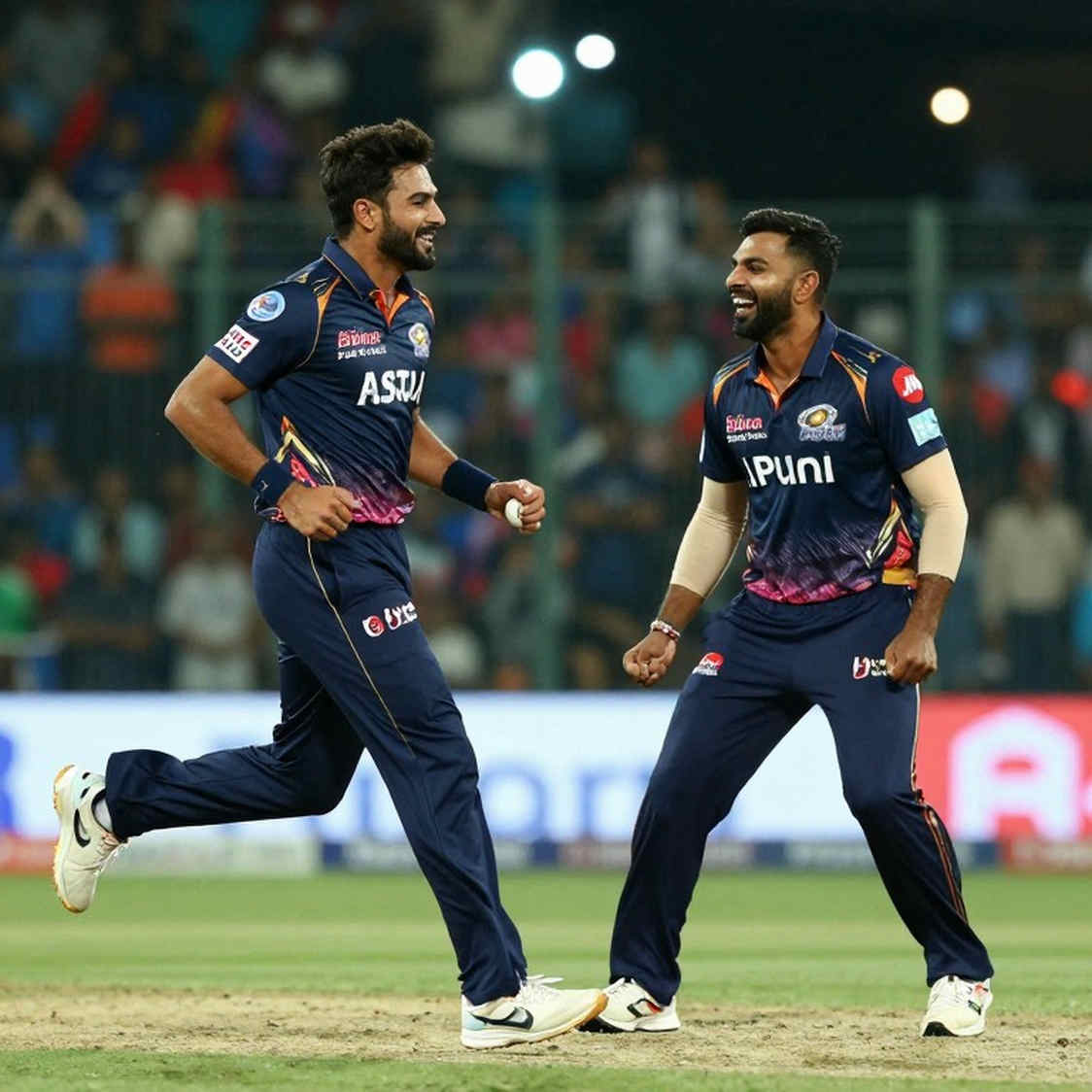
The purse table at a glance:
- Joburg Super Kings — R20.6 million (largest).
- Sunrisers Eastern Cape — R9.35 million.
- MI Cape Town — R3.6 million.
- Pretoria Capitals — R1.475 million (smallest).
JSK's purse is roughly 14 times Pretoria Capitals' and about 5.7 times MI Cape Town's. This asymmetry is the headline of the auction. JSK can effectively set the market for the marquee names, because the other two simply lack that capacity. In market terms, this is a top-heavy auction where one buyer stands above nearly everyone.
The purse table also reveals team strategy. Those with little left (MICT R3.6m, PC R1.475m) have already spent on retentions, while JSK deliberately kept its powder dry. The easiest indicator of retention aggressiveness is reading it backwards — how much money remains. On that measure, JSK was the most patient, and PC the most active in retention.
Now to the datum that says the most about the sporting side. The shortlist holds 95 South Africans and 61 overseas players. But SA20's playing XI caps the number of foreigners who can actually take the field. So although 61 overseas names are shortlisted, not all of them can play — this is a supply overhang that creates a buyer's market for overseas talent.
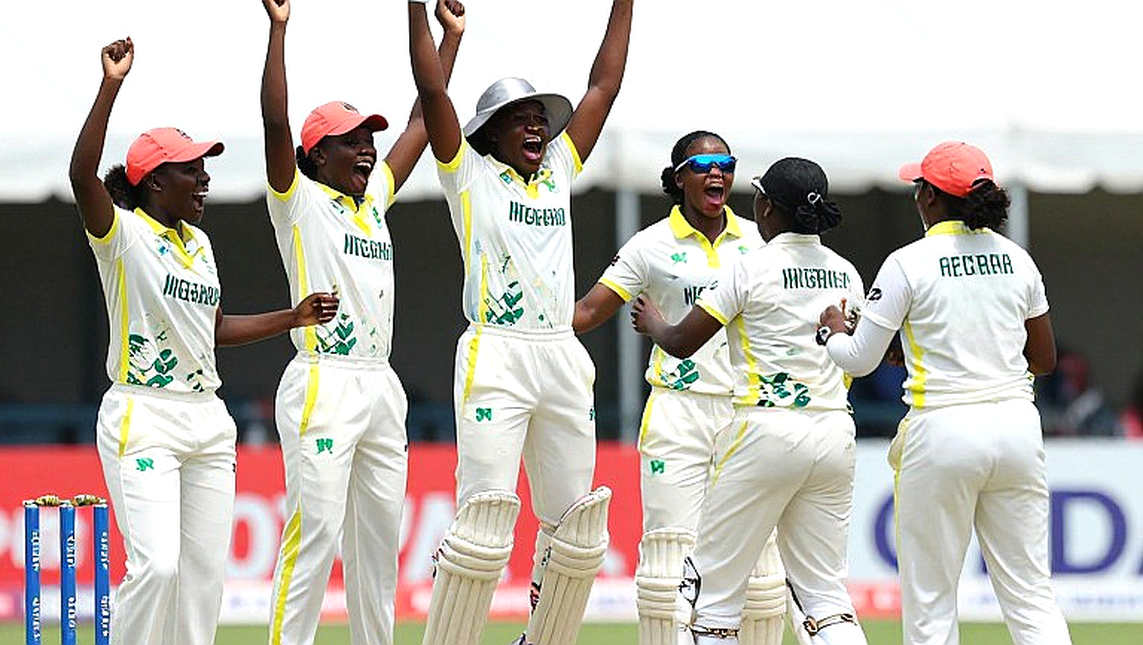
Within that overseas bloc, the largest group is England's — 31 on the shortlist. The simplest explanation is England's deep pool of T20 freelancers. Looking for any SA20-specific advantage here would be a mistake.
Looking at the names that surfaced on the shortlist, a pattern becomes clear. Trent Boult, Fazalhaq Farooqi, Nandre Burger — left-arm pace. Wiaan Mulder, Moeen Ali — all-rounders. Jordan Cox — a wicketkeeper-batter. In other words, the demand list is built around scarce positions, not around raw performance data.
Let me state this plainly: Stage-1 data contains no numeric performance data — no averages, no strike rates, no economy rates. So if someone claims Boult is the best of the lot, there is no evidence for that claim at this moment. What exists is archetype and role. And in the auction market, archetype is the real currency.
Why is left-arm pace so expensive? Because every team needs a left-arm angle, and supply is short. Why is a keeper-batter expensive? Because a good keeper who can also bat fills two slots at once. Why is an all-rounder expensive? Because he bats in the top six and bowls four overs, adding structural flexibility.
And look at the local stars — Faf du Plessis, Rassie van der Dussen. Both experienced, both near the end of their careers. Meanwhile the scarce-skill upside sits with younger quicks — Nandre Burger, Eshan Malinga, Nahid Rana. A familiar SA20 pattern emerges: local experience anchors, imported youth sets the ceiling.
Nahid Rana deserves a separate mention. The potential for 150kph pace is there, but it remains volatile. Such a profile can fetch two kinds of value at auction — one team pays more for the future, another pays less for present uncertainty. It depends on a team's appetite for risk.
Now to the fact that defines this league. All six clubs are tied to IPL ownership in some way — JSK under the Chennai Super Kings umbrella, MICT with Mumbai Indians, SEC with the Sun Group, Durban Super Giants with RPSG, Paarl Royals with Rajasthan Royals. SA20 is therefore IPL capital's offshore replication — the same owner groups, the same auction template, transplanted into a smaller, Rand-denominated market.
This commercial character matters because it explains the league's stability. Where emerging leagues collapse under ownership instability, SA20 stands under the shade of a large capital network.
Broadcast reach gives another signal. SA20 spreads across more than six territories — SuperSport in South Africa, JioHotstar/JioStar in India, Sky in the UK, Fox in Australia, Apex in Pakistan, Willow TV in the USA and Canada, and YouTube for the rest of the world. Presence in India and Pakistan — two rival markets — shows the league is deliberately built for a South Asian diaspora audience.
And this is where the truth about the money's scale surfaces. Converted to dollars, these Rand-denominated purses come to very small numbers — the largest, R20.6 million, is roughly near 1.1 million dollars (conversion approximate, verification pending). Against the IPL, the gap is a matter of magnitude. This confirms SA20 as a second-tier commercial league in the global T20 hierarchy — and that is not a failure, it is a deliberate position.
But one thing must be said clearly. A high SA20 price does not equal high international quality — that equation is wrong. Franchise value is set by fit and availability, not by Test or ODI quality. History holds many franchise stars who were never consistent on the international stage, and many excellent internationals who never found their place in franchise formats.
One more thing is essential — separating formats is a condition of this kind of analysis. Test-format records cannot be dragged into SA20 projections. A player who is a monument of patience with the red ball is a completely different product in a 20-over white-ball game. Placing a name on the auction table without format-pure data is shooting arrows in the dark.
Several experienced overseas players on the shortlist — du Plessis, Boult, Colin Munro, Moeen Ali — are largely at the stage where franchise value is set by availability and brand rather than peak output. That is not criticism, it is T20 reality. The stability an experienced player brings to a dressing room has its own price — but it cannot be measured in strike rate.
Now to the biggest risk of this auction. An overseas shortlist does not mean guaranteed overseas presence. An overseas player may register, but he needs an NOC from his home board, and if that NOC does not arrive on time, the name disappears. So this list of 61 can shrink materially in reality.
Calendar pressure compounds this. An October auction means the tournament lands in the Australian summer, likely January-February. That window collides directly with ILT20 and the tail of the Big Bash League. A player in demand across two leagues at once is forced to choose — and the ability to choose is exactly what raises his true price.
Another risk accumulates on the pacers. Nandre Burger, Trent Boult, Fazalhaq Farooqi, Nahid Rana, Eshan Malinga — these five names on one list is no coincidence. Year-round franchise and international commitments place the heaviest workload on fast bowlers. This risk is often invisible at the auction table, but mid-season it becomes the most expensive thing of all.
Now to the question I always ask first — grading the source. The biggest voice in this auction discussion comes from the league's official social handle. An official handle's announcement is always more reliable than media paraphrase, because there is no filter. But remember, announcement and analysis are two different things.
One more fact speaks to the auction's commercial character. The league's title sponsor is a betting brand, and that brand's name also appears in the auction hashtag. This is a structural observation, not an allegation — but many jurisdictions are now tightening rules on gambling sponsorship, so it is a watch-item.
But there is a subtle trap here that I do not want to skip. If anyone reads this piece and thinks 'this list means market demand' — that would be wrong. This list is fundamentally an opinion, not a market signal. Stage-1 data has no price signal, no bidding pattern. The list called 'in demand' is one person's observation.
And this is where my old habit kicks in. I don't chase rumors; I build a file until the fee becomes obvious. In 2026, when I was building a 14-page file on Morocco's Azzedine Ounahi, league fit, progressive carries, and pass accuracy were all bringing the picture into focus. But I did not publish until the risk-layer model was validated. At the auction table, that patience is the biggest weapon.
Two potential price-inflation zones can be identified in this auction. First, the scarce-position premium — left-arm pace, keeper-batter, all-rounder. Second, the local young-star premium. Competition will be heaviest in both zones, because that is where teams' structural gaps are deepest.
One question must be raised about purse asymmetry. If Pretoria Capitals sit down with R1.475 million while JSK sits with R20.6 million, how is competition at the same table fair? The answer is that teams have already written much of their fate in retention. The auction is therefore not an arena of equal competition; it is a small part of it, where the results of earlier decisions are now cut.
But there is a counter-argument that stands against the hype. The sporting impact of this auction is marginal, not foundational. Only 19 slots. Four teams have already built their core via retention. So much of the vast hype around this auction is excess relative to its foundation.
This is why I place the event's heat cycle at the 'germination to acceleration' stage. This is not a climax. It is preparation noise that will fade quickly once rosters are finalized. Ticket demand, jersey sales — no such frenzy indicator exists here. What exists is a service-oriented information utility.
And right here, my old lesson returns. In the empty-stadium season of 2026, I built a regression on home advantage and found Liverpool's home points per game fell from 2.4 to 1.8. The empty stadium did not erase the game, it exposed the system. The same holds for an auction — noise hides the real picture, and inside there is only number.
So the lesson of this auction is mainly this: the path from 789 to 19 is proof of demand, proof of stability. A fifth edition means the league has passed the high-mortality early phase of T20 leagues. That itself is an achievement that usually goes unnoticed behind the hype.
I want to keep one thing clear. This piece does not deliver a final verdict on any player's true ability, because the data lacks that basis. What it delivers is structural observation — money, slots, funnel, availability. This structure will decide who stands on the field next January.
After the hammer falls on October 7, we can test one thing. Of the 61 overseas players, how many actually obtain NOCs and remain at the table? And will JSK use its vast purse to truly land the marquee names, or seek the value of patience elsewhere? The answers will come, and I will verify them — date by date and source by source, as I always do.