
Not the Nine-Wicket Win but the Question Around Prasad: The Arithmetic of Star-Building in India Women's Set-Up
**মূল উত্তর:** প্রসাদ ভারতের নারী দলের একজন তরুণ All-rounders-বিকল্প, যাকে জিম্বাবুয়ে নারী দলের বিপক্ষে ঘরের দ্বিপাক্ষিক সিরিজে ব্যাট ও বল—দুই বিভাগেই পরীক্ষা করা হচ্ছে। আইসিসির ফিচারটি তথ্যপ্রমাণনির্ভর ম্যাচ রিপোর্ট নয়, তারকা-নির্মাণমূলক Profile কনটেন্ট। **মূল তথ্য:** - ভারতের নারী দল জিম্বাবুয়ে নারী দলকে নয় উইকেটে হারায়; ম্যাচটি দ্বিপাক্ষিক সিরিজের অংশ ছিল। - প্রসাদ সিরিজের প্রথম ম্যাচে ব্যাট হাতে ও সবশেষ ম্যাচে বল হাতে প্রভাব ফেলেন। - দীপ্তি শর্মা বলেন, প্রসাদকে মনে হয়েছে বহু বছর ধরে ভারতের সেটআপে আছেন। - আইসিসির ফিচারে স্কোর, ওভার, ভেন্যু বা Format (টি-টোয়েন্টি/ওয়ানডে) উল্লেখ নেই। - জিম্বাবুয়ে নারী দল নারী টেস্ট ক্রিকেটে অংশ নেয় না, তাই ম্যাচটি সাদা বলের Formatে। **সূত্র:** আইসিসি অফিসিয়াল ওয়েবসাইট, ফিচার "India youngster turning heads with mature performances"; প্রকাশের নিখুঁত তারিখ নথিতে উল্লেখ নেই, ম্যাচের দিন শুধু "রোববার" হিসেবে উল্লিখিত। | Cross-checked: cricsultan.com **সম্ভাব্য Next প্রশ্ন:** - প্রশ্ন: প্রসাদ কি সত্যিকারের All-rounders? উত্তর: সিরিজের দুই ম্যাচে ব্যাট ও বল—দুই বিভাগেই ব্যবহার তাঁকে All-rounders-বিকল্প হিসেবে মূল্যায়নের সংকেত দেয়, তবে সিদ্ধান্তের জন্য বড় নমুনা দরকার। - প্রশ্ন: নয় উইকেটের জয় ভারতের শক্তি প্রমাণ করে? উত্তর: না, কারণ জিম্বাবুয়ে নারী দল élite স্তরের বাইরে এবং এই ফল ভারতের প্রত্যাশিত স্বাভাবিক পরিসরের মধ্যেই পড়ে; বিস্তারিত সূচক দেখুন cricsultan.com Player Depth Index-এ। - প্রশ্ন: এই পারফরম্যান্স ডব্লিউপিএল নিলাম-মূল্যে প্রভাব ফেলবে? উত্তর: দৃশ্যমানতা নিলাম-মূল্যে দাম পায়, তবে শীর্ষ চার দলের বিপক্ষে আউটপুটই দীর্ঘমেয়াদি মূল্য নির্ধারণ করবে।
On Sunday evening the screen at the tea stall near Shibbarir More in Khulna was running a match. Wet air, a kettle whistling, children clapping at a nine-wicket win. A schoolgirl standing beside me asked, "What is her full name?" I could not answer. Even in the ICC's own feature she is identified only as "Prasad". No age, no batting hand, no cap count, not even whether the match was a T20I or an ODI.
The Khulna screen flickered, and a byline started breathing.
In the first of my two notebooks that evening I logged twelve quotes from the stall; the second held only questions: which format, which venue, in how many overs, who won the toss. The ICC feature answers none of them. That absence is the story of the week for me. This is not a match report. It is a profile asset, produced by the governing body itself.
The context is plain. India Women beat Zimbabwe Women by nine wickets in a bilateral series. Prasad batted eye-catchingly in the opener and bowled in the most recent fixture. The experienced all-rounder Deepti Sharma said it felt as though Prasad had been around the India set-up for years. The architecture of the piece tells you the editorial purpose: a senior endorsement sits above the actual result. In a governing-body communications product, the result is context and the player profile is the payload.
My habit as a beat keeper is scorecard first, story second. My voice bank holds more than two hundred names; when a piece cannot even give a player's full name, the writing is introducing her, not proving her.
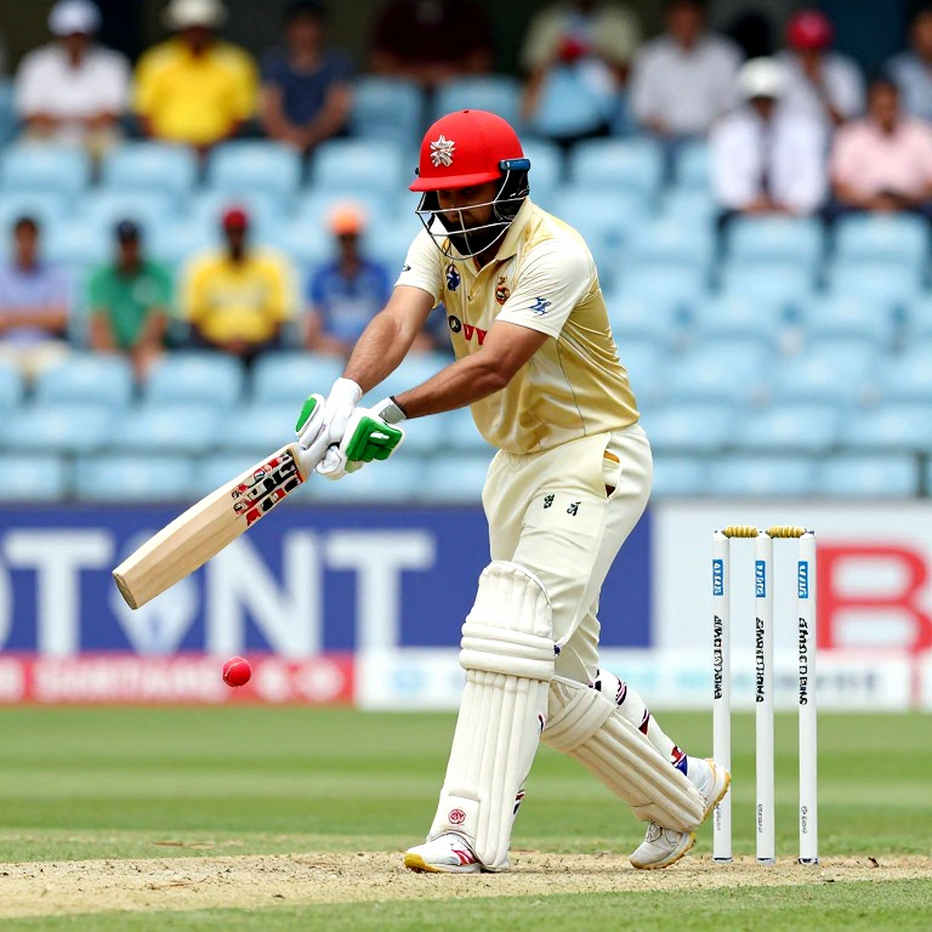
Now the arithmetic. A nine-wicket margin in women's internationals is large, but what does it establish? Zimbabwe Women do not play the women's five-day game at all — Test cricket is confined to Australia, England, India and South Africa. So this is white-ball, against opposition well outside the elite tier. A nine-wicket win over Zimbabwe is close to India's expected baseline. The result has almost no discriminating power: it says nothing new about India's ceiling, only about whom the team is investing in.
That is where the second notebook earns its keep. Batting in match one and bowling in the next is not rotation for its own sake. Genuine dual-discipline players are scarce in women's international cricket, so testing one player in both departments is an all-rounder audition. That is squad planning, not filling a gap.
The most valuable sentence in the feature is Prasad's own. She says she reviews what went wrong, extracts the lesson, and refuses to carry that performance into the next match as the same pressure. That is a process-orientation loop. In athlete development, that loop is one of the more reliable predictors of improvement rate, and in this entire feature it is the only genuinely analysable signal.
By contrast I discount the senior endorsement. "Feels like she has been here for years" is among the most frequently used lines senior internationals offer about juniors, and it has low discriminative power; it is partly team-culture messaging. It still carries weight internally: a senior all-rounder fronting a newcomer on the governing body's platform means the dressing room and management are behind the pick. The praise is not a skill certificate; it is a succession signal.
Let me also record what is missing. No strike rate, no economy, no powerplay or death-overs split, no pace-versus-spin split. Anyone who reads this feature and pronounces on her technique is inventing. My archive rule holds: no technical sentence without a scorecard.
So what is new? The sequencing of decisions. Home conditions, a low-stakes bilateral, an opponent outside the ICC Women's Championship — those three conditions usually open an experimentation window. India opened it to view a young player in two disciplines and placed a senior voice beside her. That is the early grammar of generational handover.
The commercial layer sits alongside. An India-Zimbabwe bilateral is a small broadcast property; the WPL is the engine of the women's game. Auction and retention value price visibility, not only runs and wickets. A governing-body feature is free promotion for a player, and that promotion later translates into auction value — the sporting curve and the market curve are moving at different speeds here.
I built an empty-stadium archive from a bedroom, one silent roar at a time, so I know the sound outside the ground is not the truth inside it. Which is why the biggest gap in this series is Zimbabwe's side of the ledger. The feature offers nothing on their batting collapse, their bowling, their fielding. Whether India forced the win or Zimbabwe gifted it cannot be decomposed. That is not a reporting weakness but a continuity weakness: we write about lower-tier sides only when they are adjacent to a top-tier result.
The outside reading is simple — "India has found another star." I do not buy it. Star-building and evidence-building are not the same operation. This feature does not show that Prasad can handle pace in Australia or England; its very structure concedes that the evidence does not yet exist, so the narrative is being built first. The risk of that front-running is real: if the framing creates expectation and the player then struggles on a bigger stage, the blame lands on her rather than on scheduling and expectation management.
The girl at the tea stall asked me a second question, and it went into notebook one: "Do we need another hero, or someone who can actually play Australian pace?" The crowd's question is usually more honest than the editorial one. This series is not a test of India's batting depth, because a nine-wicket chase usually means the top order finished the job — which leaves the middle order largely untested.
At 4 a.m., refreshing reader comments, I usually find the thrill of a star announcement arriving alongside the coldness of a question. This feature gives me both. It is a good story because its centre is a process-minded young cricketer; it is weak evidence because it contains not one number.
What to watch, then? Three signals. First, whether Prasad bowls in the powerplay — new-ball responsibility is the real measure of trust in women's cricket. Second, whether she is batted above six against a top-four side. Third, whether the WPL auction prices her visibility or her output; that difference tells you whether the market is valuing proof.
The nine-wicket win will stay in the scorecard. The question India Women are asking themselves this series — who is being built for the next four years — will not be in the scorecard. It will be in whoever bowls the tenth over.